
Available 24/7 at
0755-82798135

Understanding Inductors: Types, Applications, and Selection Tips for Electronics Enthusiasts
Inductors are important passive components used in a wide range of electronic circuits. Although they may look simple from the outside, inductors play a critical role in power conversion, filtering, signal processing, and electromagnetic control. From consumer electronics to industrial systems, inductors help maintain stable circuit performance and improve overall efficiency.
For electronics enthusiasts, engineers, and purchasing professionals, understanding inductor basics is essential when designing or sourcing reliable electronic products. Choosing the wrong inductor can lead to poor efficiency, excessive heat, unstable current, unwanted noise, or reduced system performance.
In this guide, we will explain what inductors are, the main types available, their common applications, and practical selection tips to help you choose the right inductor for your electronic project. To explore more electronic components and sourcing solutions, visit TomatoElec.
What Is an Inductor?
An inductor is a passive electronic component that stores energy in a magnetic field when electric current flows through it. It is typically made of a coil of wire, sometimes wrapped around a core material such as air, iron, or ferrite.
Inductors resist sudden changes in current, which makes them especially useful in applications such as:
- Power supply circuits
- DC-DC converters
- EMI filtering
- RF tuning and matching
- Signal filtering
- Energy storage
Because of these functions, inductors are widely used in both low-frequency and high-frequency electronic systems.
Common Types of Inductors
Different inductor types are designed for different circuit needs. Understanding their structure and characteristics helps users choose more suitable components.
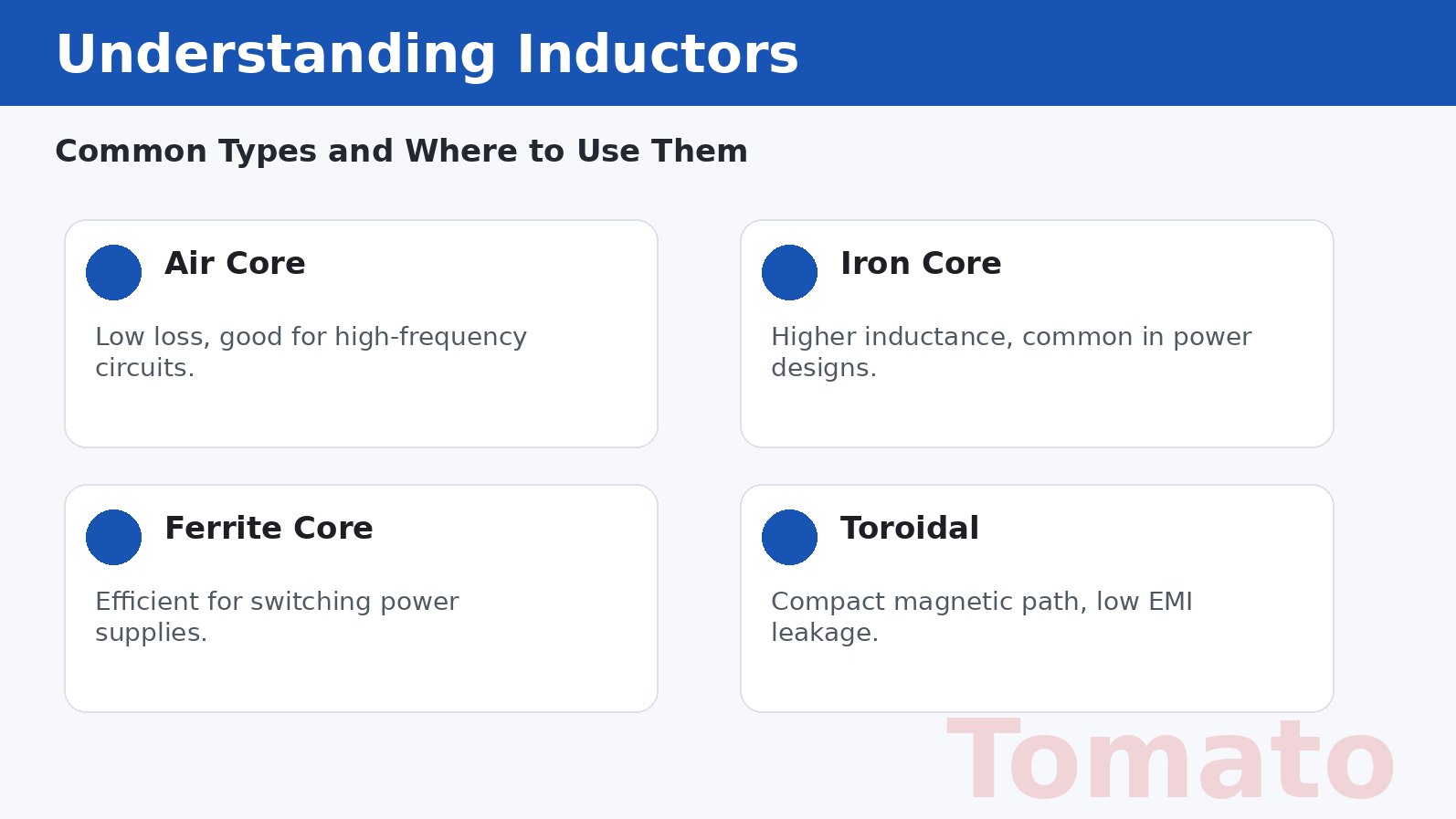
1. Air Core Inductors
Air core inductors do not use a magnetic core material. They are commonly used in high-frequency applications because they avoid core losses and magnetic saturation.
2. Iron Core Inductors
Iron core inductors provide higher inductance values and are often used in lower-frequency power applications. They are suitable where higher magnetic permeability is needed.
3. Ferrite Core Inductors
Ferrite core inductors are widely used in switching power supplies, EMI suppression, and high-frequency filtering. Ferrite materials help reduce losses and improve efficiency in many modern electronic designs.
4. Toroidal Inductors
Toroidal inductors use a ring-shaped core that helps contain the magnetic field more effectively. They are known for compact structure, low electromagnetic leakage, and good efficiency.
5. Multilayer and SMD Inductors
These inductors are commonly used in compact PCB designs and automated assembly. They are popular in mobile devices, communication products, and other space-limited electronics.
Main Applications of Inductors
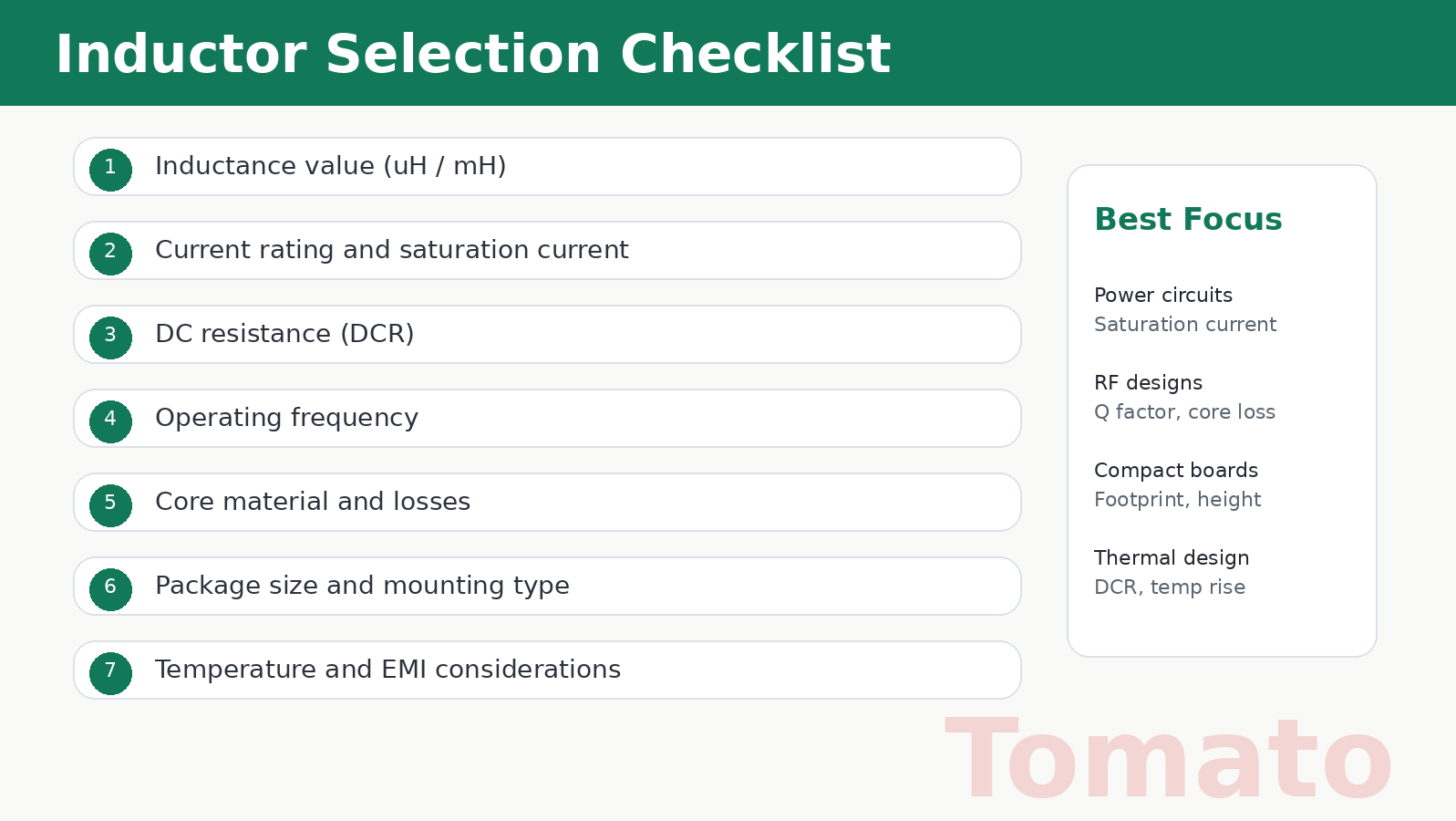
Power Supplies
Inductors are essential in power conversion circuits, especially in switching regulators and DC-DC converters. They store and release energy efficiently while helping smooth current flow.
EMI Filters
Inductors are often used in filters to block unwanted noise and reduce electromagnetic interference. This is especially important in industrial electronics, automotive systems, and communication devices.
RF Circuits
In radio frequency applications, inductors are used in tuning circuits, impedance matching networks, and frequency filtering stages.
Energy Storage
Some inductors are selected mainly for their ability to store energy temporarily in magnetic form, especially in switching power systems.
Consumer and Automotive Electronics
Inductors are widely used in smartphones, computers, displays, chargers, automotive control units, and smart electronic modules.
Key Factors to Consider When Selecting an Inductor
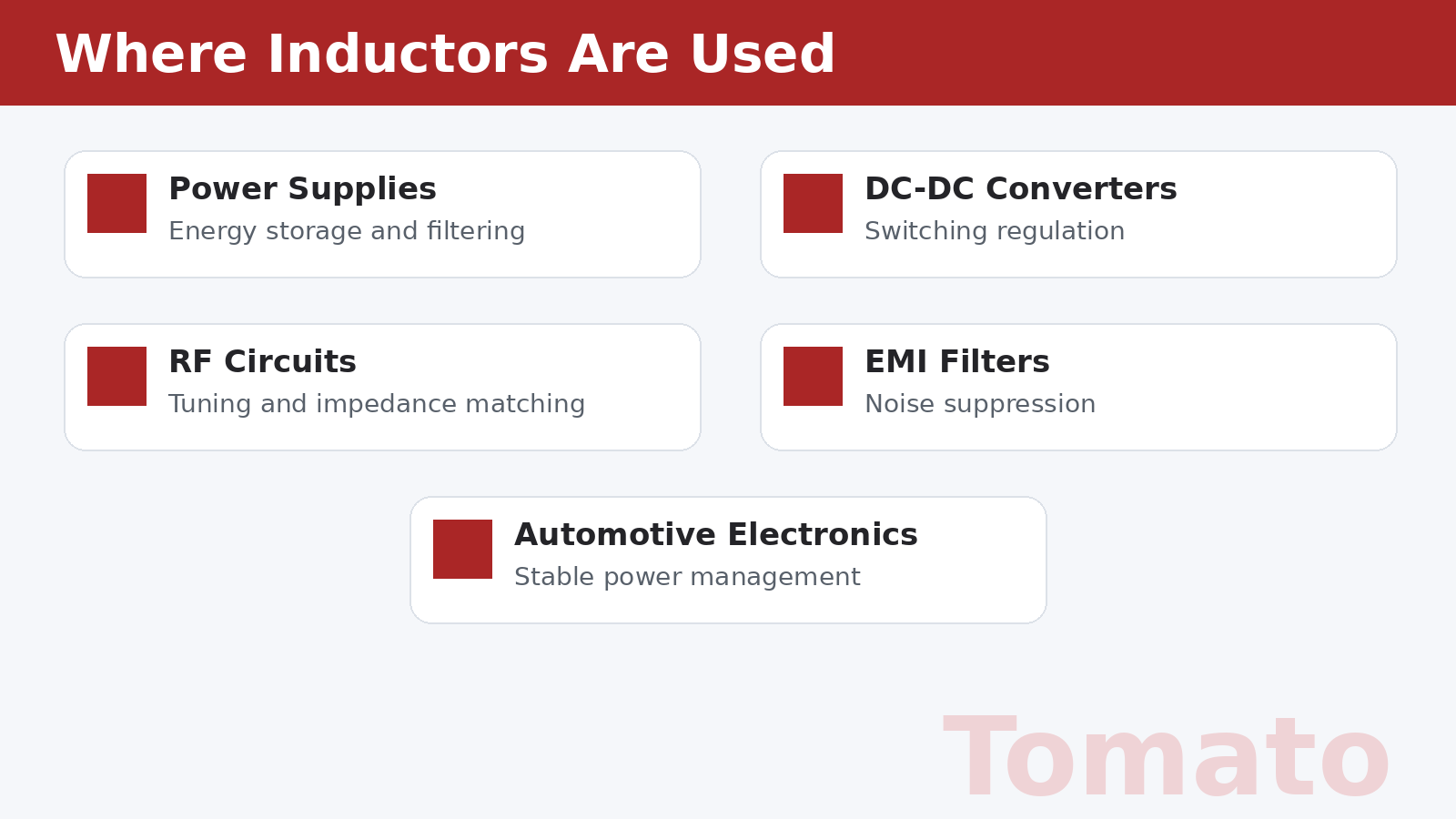
1. Inductance Value
The inductance value, usually measured in microhenries (µH) or millihenries (mH), is one of the first parameters to consider. It should match the design requirements of the target circuit.
2. Current Rating
The rated current determines how much current the inductor can handle safely. Two important current-related values are operating current and saturation current. If the current exceeds the saturation limit, inductance may drop significantly and circuit performance may suffer.
3. DC Resistance (DCR)
DC resistance affects efficiency and heat generation. Lower DCR is generally preferred in power applications because it helps reduce power loss.
4. Core Material
Core material influences inductance, frequency behavior, losses, and saturation characteristics. Air core, iron core, and ferrite core inductors each have different strengths depending on the application.
5. Operating Frequency
Some inductors are designed for high-frequency use, while others are better suited to low-frequency power circuits. Matching the inductor to the operating frequency is essential for stable performance.
6. Package Size and Mounting Type
Designers also need to consider available PCB space, assembly method, and mechanical requirements. SMD inductors are preferred for compact automated production, while through-hole inductors may be easier for prototyping or high-mechanical-stress use. You can browse related products in the inductors category.
7. Temperature and Environmental Conditions
Inductor performance may change under heat, vibration, and harsh operating environments. For automotive, industrial, or outdoor applications, durability and temperature performance become more important.
SMD vs Through-Hole Inductors
SMD Inductors
SMD inductors are widely used in compact modern electronics. They support automated PCB assembly and help reduce board size.
- Small size
- High assembly efficiency
- Good compatibility with mass production
- Suitable for portable and compact electronics
Through-Hole Inductors
Through-hole inductors are often used in prototyping, repair work, educational electronics, and some high-power applications.
- Easy manual soldering
- Strong mechanical connection
- Suitable for testing and development
- Often used in traditional circuit designs
The choice depends on your product design, assembly process, and physical layout needs.
Common Mistakes to Avoid
Ignoring Saturation Current
An inductor may seem suitable based on inductance alone, but if its saturation current is too low, the circuit may become unstable.
Overlooking DCR
In power circuits, high DCR can reduce efficiency and increase heat.
Choosing the Wrong Core Type
Using an unsuitable core material may result in unwanted losses, poor high-frequency performance, or lower efficiency.
Ignoring Package Constraints
Even if the electrical specifications are correct, the component may still be unsuitable if the package does not match the PCB design.
Focusing Only on Price
For stable long-term performance, consistency, reliability, and supply quality often matter more than the lowest price.
Practical Tips Before Buying Inductors
Before purchasing inductors for your project, it is helpful to confirm the following:
- Required inductance value
- Operating current and saturation margin
- DCR and efficiency target
- Frequency range
- Core material suitability
- Package size and mounting style
- Operating temperature and reliability needs
- Supplier inventory and lead time
For engineering projects, prototyping, repair, and production sourcing, working with a reliable electronic components supplier can reduce risk and improve procurement efficiency.
Conclusion
Inductors are essential in modern electronics, especially in power management, filtering, RF design, and energy storage. Although they may appear simple, selecting the right inductor involves careful evaluation of inductance, current rating, core material, frequency, package, and environmental performance.
By understanding the main types of inductors and their applications, electronics enthusiasts and component buyers can make better design and sourcing decisions. Whether you need compact SMD inductors for PCB assembly or robust power inductors for demanding circuits, choosing the right component will help improve reliability and performance.
If you are looking for electronic components for your next project, visit TomatoElec to explore more inductor products or reach out through the contact page.