
Available 24/7 at
0755-82798135

LM5066 vs LM25066: Key Differences and Applications
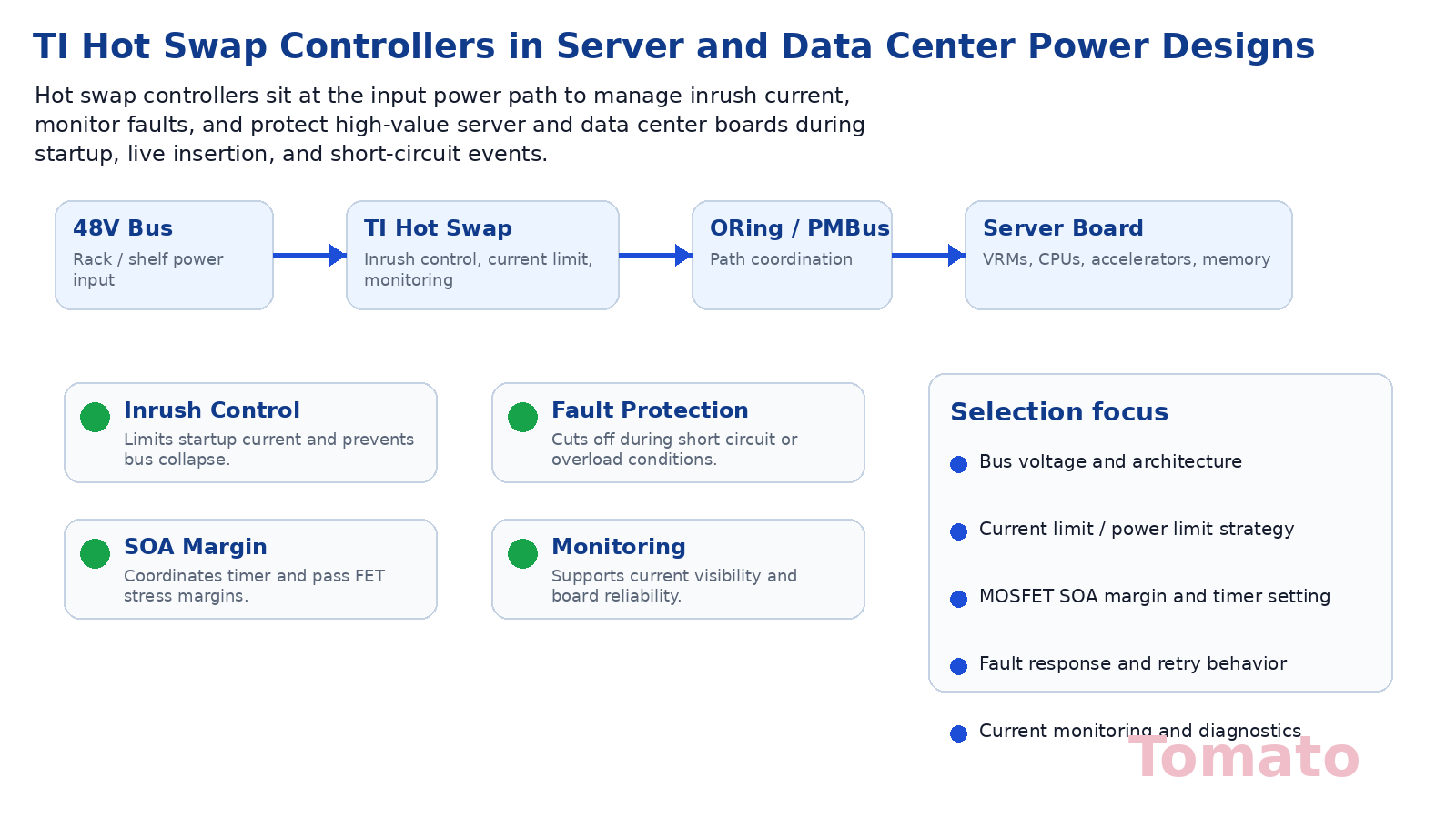
TI hot swap controllers are commonly used to manage inrush current, monitor power behavior, and protect system power paths in server, telecom, industrial, and embedded designs.
Among them, LM5066 and LM25066 are often compared because both support hot swap protection and power monitoring, but they are intended for different voltage domains and application environments.
This article explains the key differences between LM5066 and LM25066, and helps engineers and buyers understand which device may be more suitable for a specific power architecture. For more electronic components and sourcing support, visit TomatoElec.
1. What LM5066 and LM25066 Are Used For
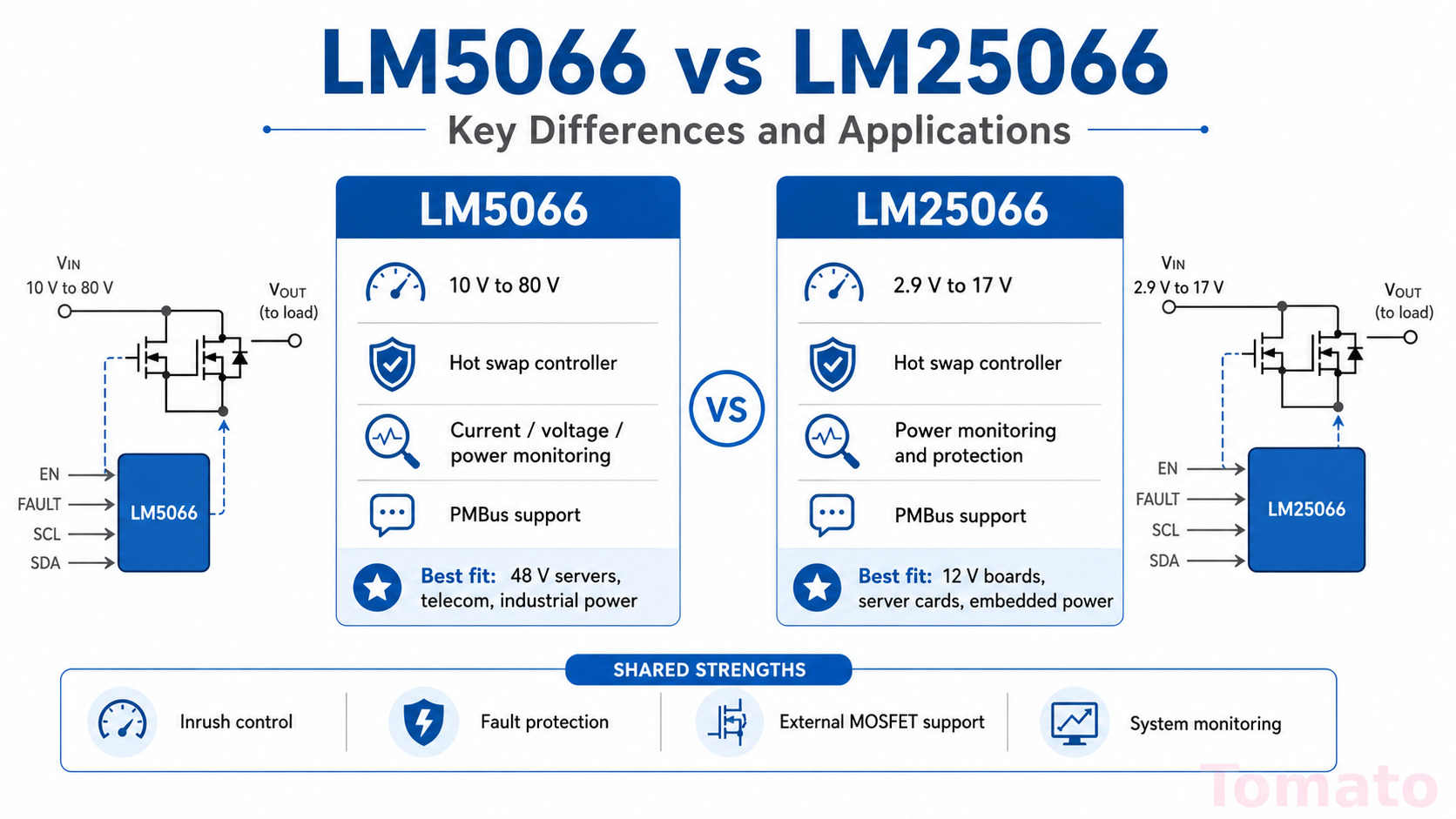
LM5066 and LM25066 are both hot swap and power management devices from TI. They are designed to protect system power rails during startup, insertion, overload, and fault events, while also giving the designer monitoring visibility for important operating conditions.
In practical designs, these devices are often selected when the power path must support controlled startup behavior, external MOSFET protection, and board-level system power supervision.
The biggest reason they are compared so often is that they address similar design goals but target different input voltage ranges and different board-level environments.
2. Main Voltage and Architecture Differences
The most important difference between LM5066 and LM25066 is the input voltage range. LM5066 is intended for higher-voltage hot swap designs, while LM25066 is intended for lower-voltage system power management.
In practical terms, LM5066 is a better fit for 48V-related backplane, telecom, and industrial power systems, while LM25066 is usually more suitable for 12V boards, server cards, and lower-voltage embedded or subsystem power paths.
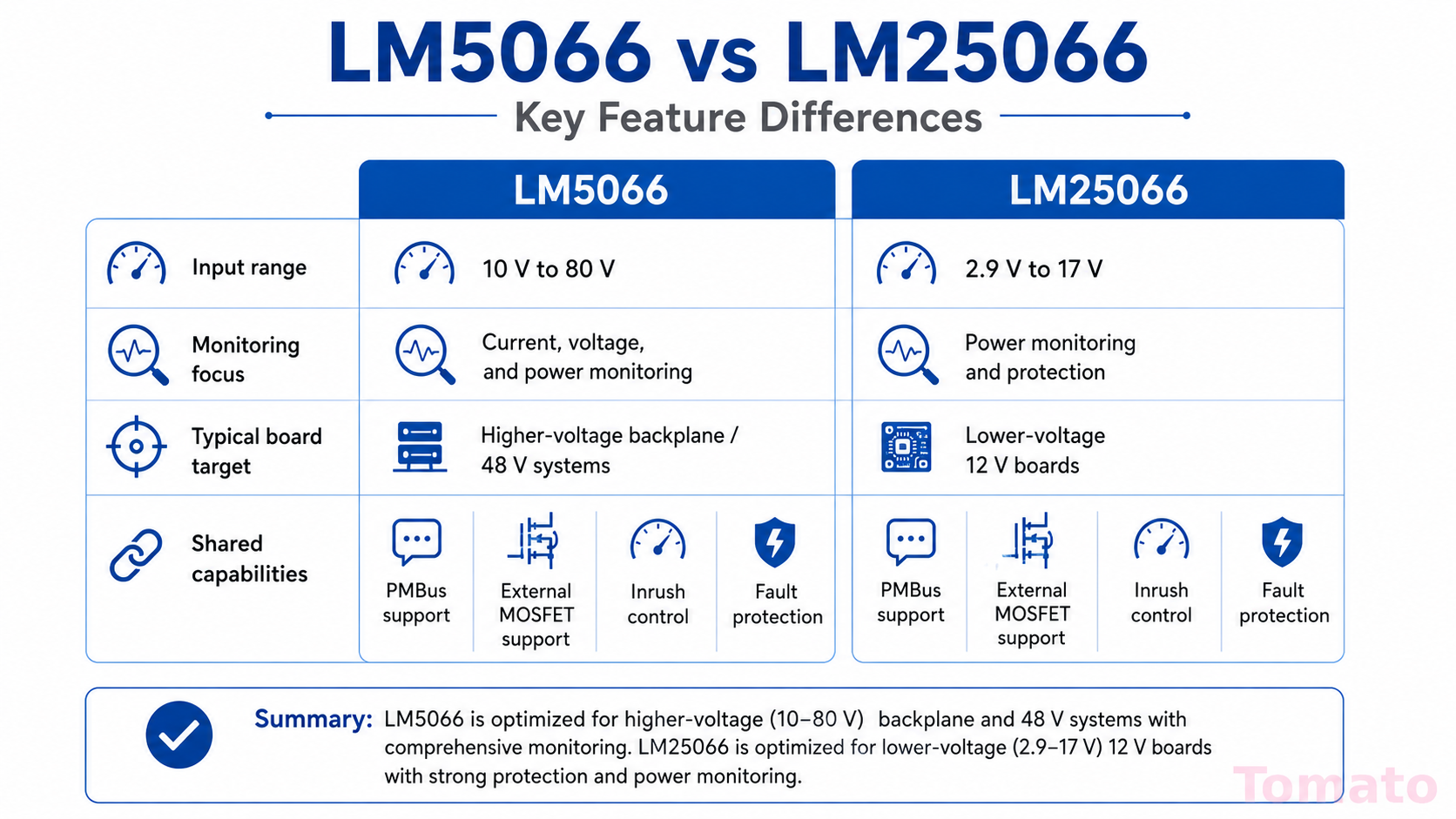
This difference in voltage focus affects not only the power rail itself, but also the surrounding architecture, component stress, board layout strategy, and protection design margin.
3. Monitoring and Protection Differences
Both devices support monitoring and protection, but the way engineers usually position them in a design can be different. LM5066 is often discussed in higher-voltage applications where current, voltage, and power visibility are important across a more demanding power entry path.
LM25066 is often selected in lower-voltage systems where hot swap behavior, system monitoring, and board-level power management are needed in a more compact 12V-oriented environment.
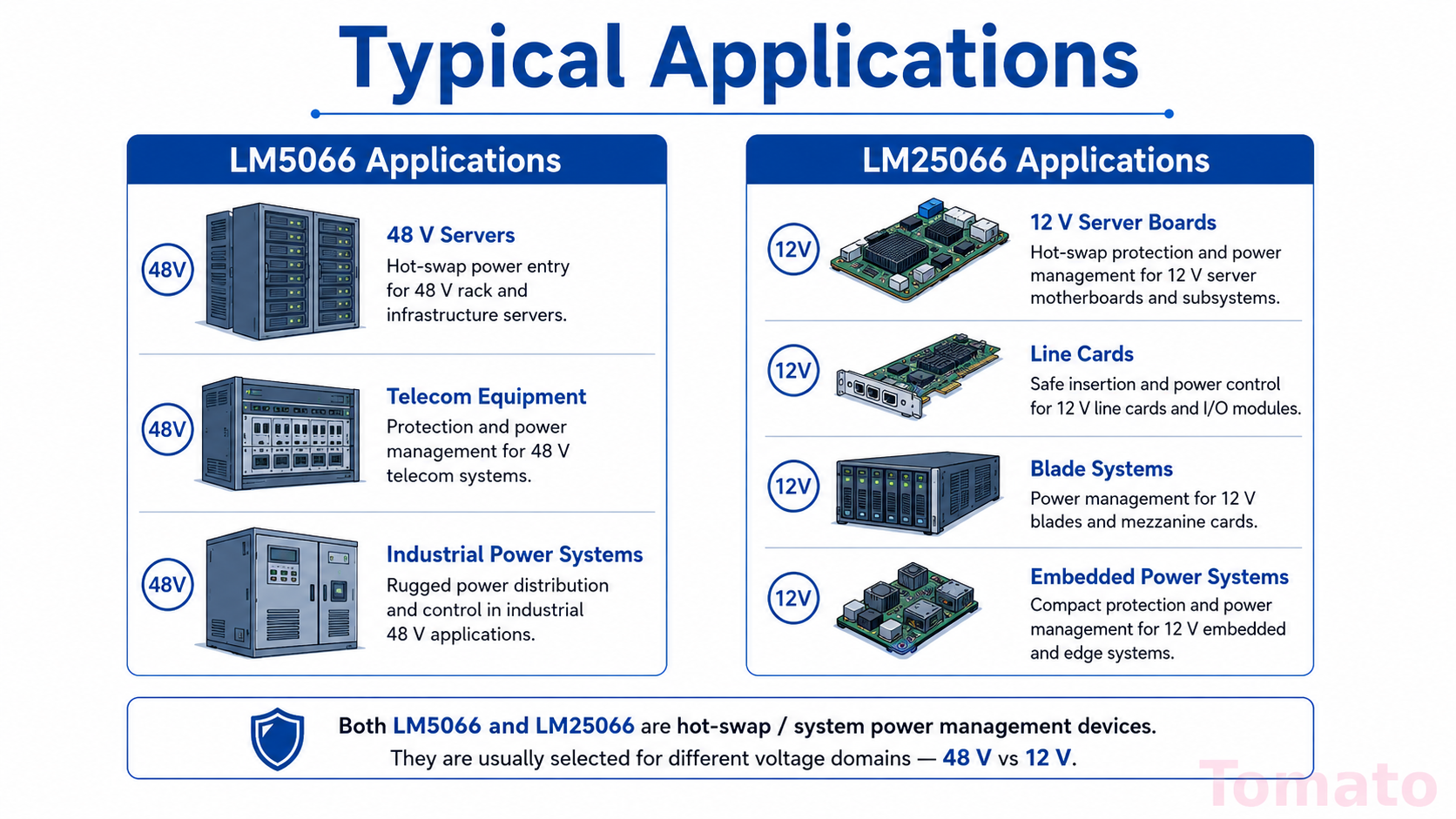
From a design perspective, the real question is not only which part has monitoring, but which monitoring and protection structure better matches the actual rail voltage, board target, and system power architecture.
4. Typical Applications
LM5066 is generally better aligned with higher-voltage applications such as 48V server infrastructure, telecom systems, and industrial power equipment where the input rail is significantly above standard 12V board-level distribution.
LM25066 is more often aligned with lower-voltage applications such as 12V server boards, line cards, blade systems, and embedded power platforms where compact system power protection and monitoring are required.
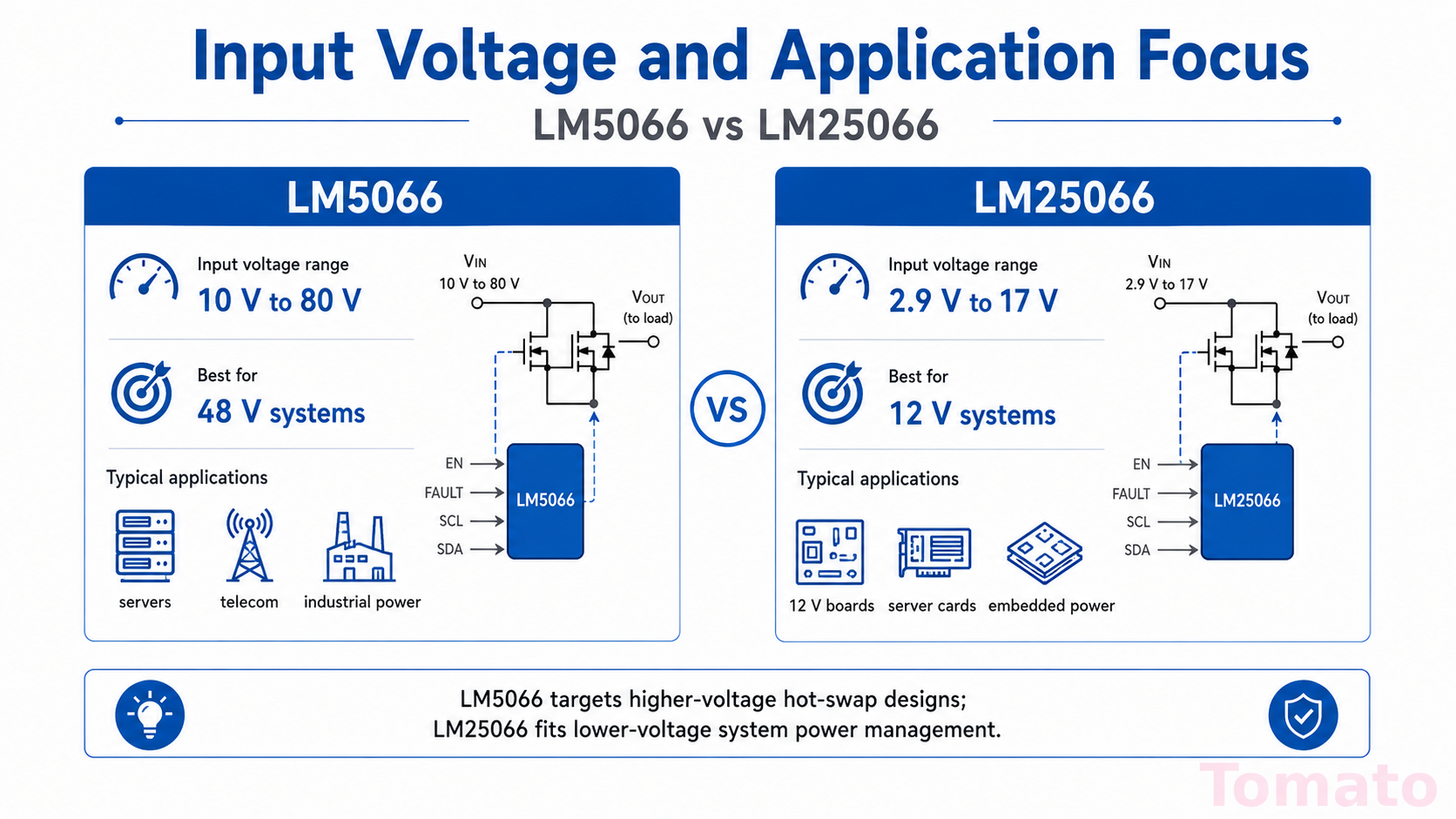
This application split is one of the clearest ways to distinguish the two devices. Even when both are capable hot swap solutions, they are usually not aimed at exactly the same system voltage domain.
5. How to Choose Between LM5066 and LM25066
A simple way to choose between LM5066 and LM25066 is to start with the system voltage range. If the design is clearly in a higher-voltage domain, LM5066 will usually be the more relevant starting point. If the design is centered on a lower-voltage 12V-class board or subsystem, LM25066 will usually be the better fit.
After that, engineers should compare the application environment, board architecture, required monitoring depth, and protection strategy. It is also important to look at how the device fits with the external MOSFET, bus structure, and power management goals of the complete system.
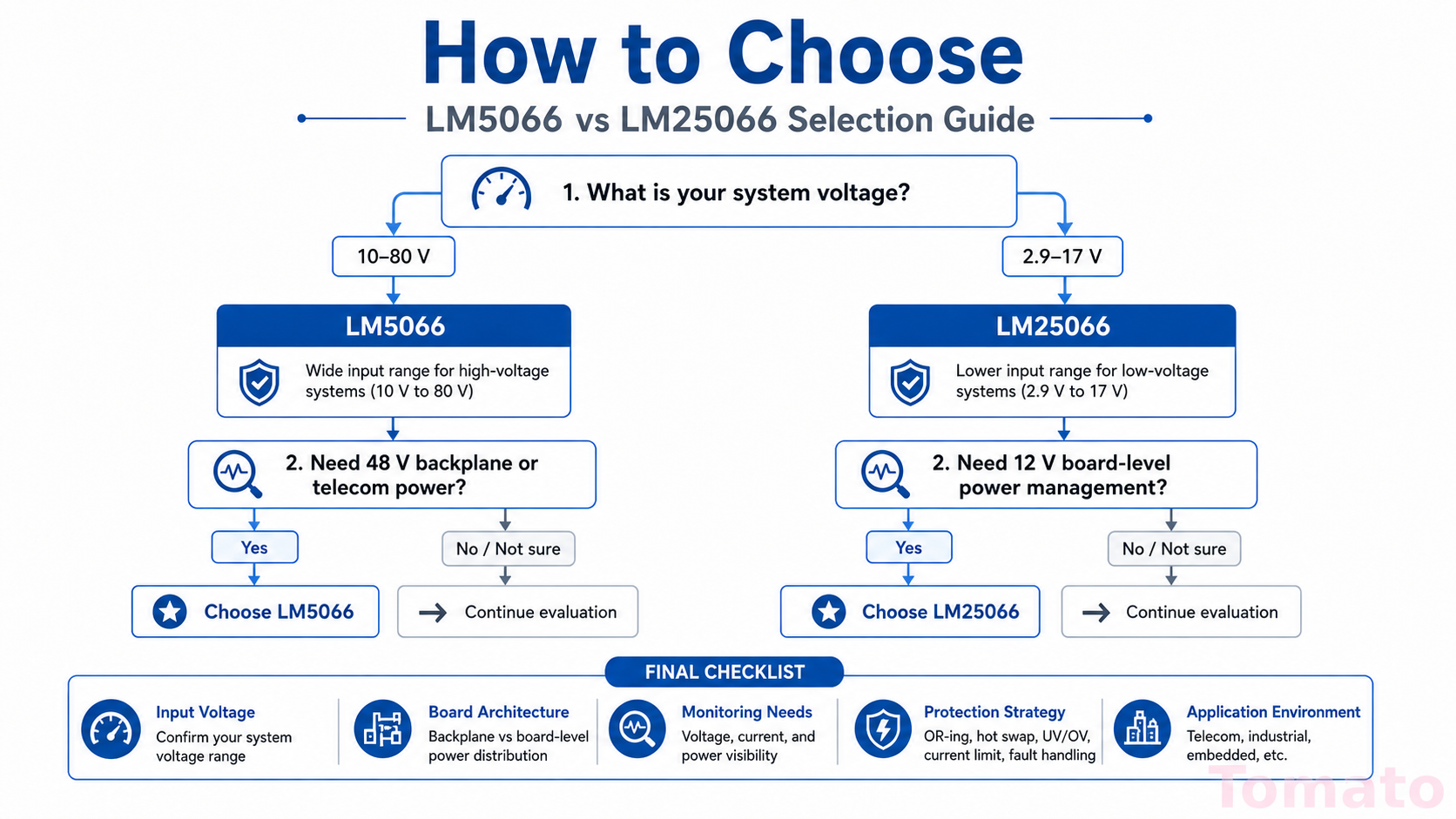
In other words, the best choice depends less on which device sounds stronger in isolation, and more on which one matches the voltage domain and protection target of the actual design.
6. Practical Selection Tips
- Start with the actual system input voltage range.
- Check whether the application is closer to 48V infrastructure or 12V board-level power.
- Review monitoring needs for current, voltage, and power visibility.
- Confirm how the device will work with the external MOSFET and protection strategy.
- Evaluate whether the end application is server, telecom, industrial, or embedded.
- Use official TI datasheets and design tools before final selection.
Conclusion
LM5066 and LM25066 are both valuable TI hot swap and system power management devices, but they are usually chosen for different voltage ranges and different application targets.
If the project is built around a higher-voltage input path, LM5066 is often the more relevant option. If the design is focused on lower-voltage 12V system power management, LM25066 is usually the better fit. If you are evaluating TI hot swap solutions, visit the TomatoElec homepage or contact us through the contact page.