
Available 24/7 at
0755-82798135

Panasonic Aluminum Capacitors in DC-DC and Industrial Power Designs
Panasonic aluminum electrolytic capacitors are widely used in DC-DC converters and industrial power systems because they offer practical capacitance, stable electrical performance, and broad package coverage for different circuit structures.
In real power designs, different capacitor positions face different electrical stress, ripple current, temperature conditions, and lifetime requirements. That is why the right capacitor family and mounting style should be selected according to the actual application rather than by capacitance alone.
This article explains the typical applications of Panasonic aluminum electrolytic capacitors in DC-DC converters and industrial power designs, and shows how engineers and buyers can think about selection more clearly. For more electronic components and sourcing support, visit TomatoElec.

1. Input Filtering in DC-DC Converters
At the input side of a DC-DC converter, aluminum electrolytic capacitors are often used to absorb ripple from the upstream DC bus and help stabilize the input voltage seen by the converter stage.
In this position, low impedance, ripple current capability, and reliable long-term behavior are especially important. Panasonic surface mount, radial lead, and hybrid options may all be considered depending on the board format, available space, expected current stress, and thermal condition.
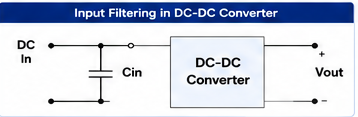
Input filtering is not only about suppressing ripple. It also helps reduce stress on the converter, supports stable switching operation, and can improve overall system reliability when the right capacitor is selected.
2. Output Smoothing and Ripple Reduction
At the output side of a DC-DC converter, capacitors are used to smooth switching ripple and help maintain a stable DC output voltage for the load.
For this position, ESR, ripple current handling, and frequency behavior become very important. Panasonic's broader lineup is useful here because designers may need to balance low ESR, compact size, and required lifetime depending on whether the design priority is efficiency, board area, or thermal margin.
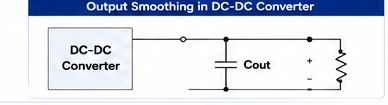
Good output capacitor selection can reduce output ripple, improve transient response, and help maintain more stable downstream power conditions in industrial control or embedded power systems.
3. Bulk Energy Storage in Industrial Power Stages
In industrial power sections, such as rectifier output stages, inverter front ends, motor drives, UPS-related circuits, and auxiliary DC bus designs, aluminum electrolytic capacitors are often used as bulk energy storage devices.
These applications usually require larger capacitance, stable lifetime performance, and strong endurance under continuous electrical and thermal stress. For industrial equipment, long life and high reliability are often more important than minimum size alone.
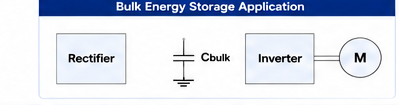
This is one reason Panasonic radial lead and other long-life aluminum electrolytic capacitor families remain highly relevant in industrial instruments and power equipment. Panasonic's official product pages specifically position radial lead types toward high reliability, long life, low impedance, and high ripple current for industrial use. :contentReference[oaicite:1]{index=1}
4. Snubber, Clamp, and Auxiliary Circuits
Aluminum electrolytic capacitors can also appear in snubber-related support circuits, clamp-related sections, and auxiliary power circuits that support control boards, monitoring modules, or drive circuits.
Although these positions may not always require the largest capacitance values, they still benefit from stable characteristics, dependable lifetime, and appropriate impedance behavior. The right choice depends on whether the circuit priority is low loss, general-purpose stability, compact mounting, or long service life.
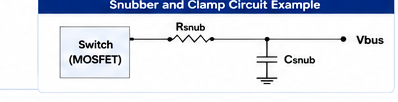
In supporting circuits, engineers should pay close attention to mounting constraints, operating temperature, and the real voltage margin instead of selecting by capacitance value alone.
5. How to Choose the Right Panasonic Capacitor Family
Different capacitor positions in a power circuit do not require exactly the same characteristics. The correct Panasonic capacitor family should be selected based on the actual function in the circuit.
| Application Position | What Usually Matters Most | Selection Direction |
|---|---|---|
| Input Filtering | Ripple current, low impedance, stability | Choose according to ripple stress, space, and board structure |
| Output Smoothing | Low ESR, ripple control, transient support | Consider low ESR and thermal margin carefully |
| Bulk Energy Storage | Capacitance, lifetime, voltage, endurance | Prioritize long life and industrial reliability |
| Auxiliary / Snubber Support | Stable performance, fit, service life | Select according to real operating stress and installation condition |
Panasonic officially provides surface mount, radial lead, and hybrid families across its aluminum capacitor portfolio, which makes it easier to align the capacitor type with compact SMT boards, through-hole industrial assemblies, or lower-ESR hybrid needs. Panasonic's technical content also shows hybrid capacitors being used for DC-DC converter input and output-related power applications where size reduction and performance improvement matter. :contentReference[oaicite:2]{index=2}
6. Practical Design and Sourcing Tips
- Always check ripple current rating at the actual operating frequency and temperature.
- Keep sufficient thermal margin to support lifetime goals.
- Use adequate voltage margin instead of matching operating voltage too closely.
- Confirm whether surface mount, radial lead, or hybrid structure fits the PCB and assembly process.
- Review lifetime requirements for industrial equipment, especially under long duty cycles.
- Work with reliable suppliers and confirm stock continuity for production planning.
Conclusion
Panasonic aluminum electrolytic capacitors play important roles across DC-DC converters and industrial power systems, from input filtering and output smoothing to bulk energy storage and auxiliary circuit support.
The best selection does not come from capacitance alone. It comes from matching the capacitor's ESR, ripple current capability, lifetime, package style, and reliability level to the actual position in the circuit. If you are evaluating Panasonic capacitor options, you can also read Panasonic Aluminum Electrolytic Capacitors: Types, Features, and Applications, review Panasonic Hybrid Aluminum Electrolytic Capacitors: Benefits, Applications, and Selection Tips, compare Surface Mount vs Radial Lead Aluminum Electrolytic Capacitors: Key Differences and How to Choose, visit the TomatoElec homepage, or contact us through the contact page.