
Available 24/7 at
0755-82798135

Low ESR, Ripple Current, and Lifetime in Aluminum Capacitors
When designing power supplies and industrial electronics, Panasonic aluminum electrolytic capacitors remain one of the most important component choices for stable performance and long-term reliability.
Among the many specifications shown in a datasheet, Low ESR, Ripple Current, and Lifetime are the three factors that most directly affect efficiency, heat generation, and long-term durability. For engineers and buyers, understanding how these three parameters work together is often more important than simply choosing a larger capacitance value.
This guide explains what each factor means, why it matters, and how to select the right aluminum electrolytic capacitor for real power and industrial applications. For more electronic components and sourcing support, visit TomatoElec.
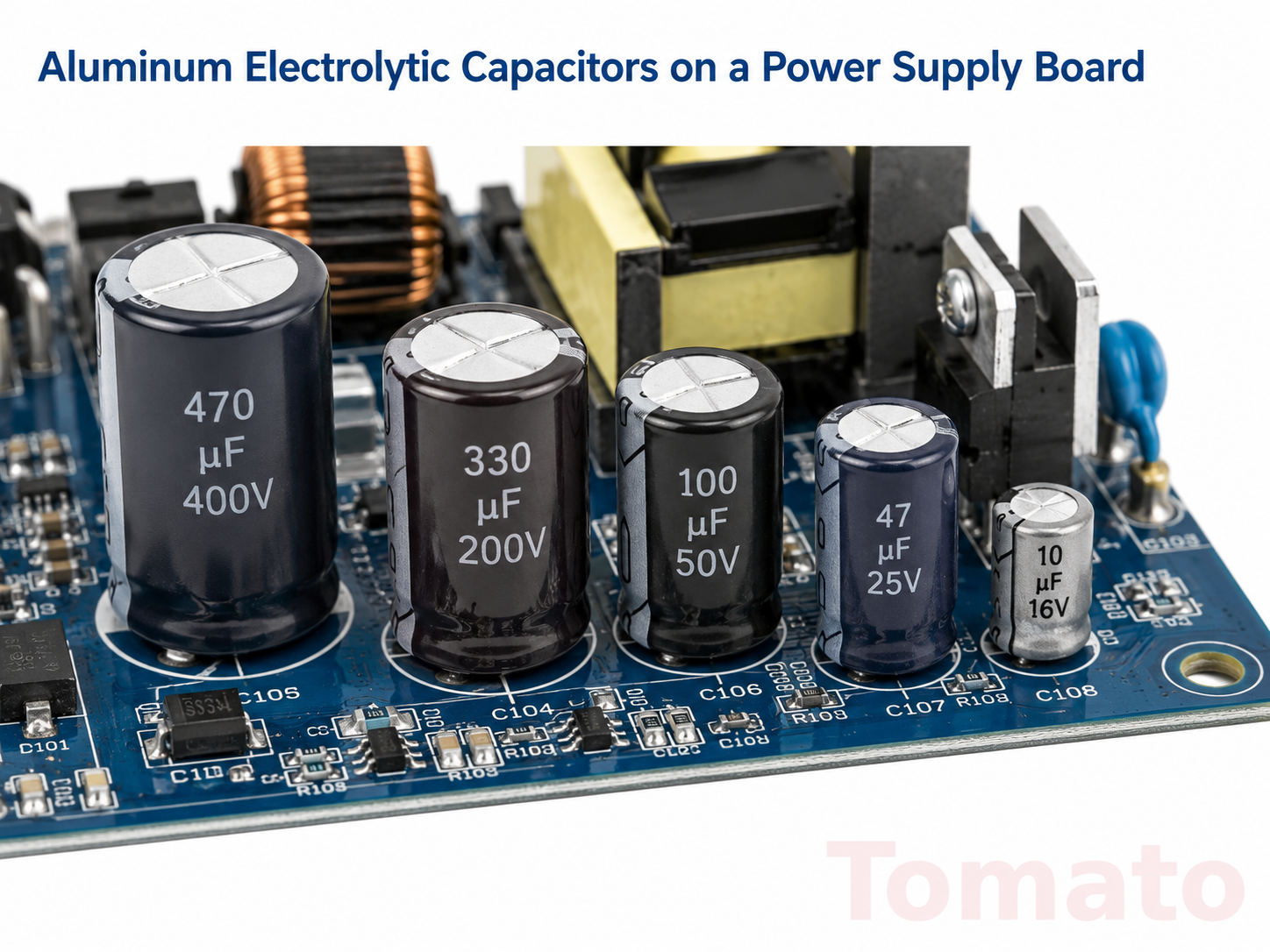
1. What Is ESR and Why Is Low ESR Important?
ESR, or Equivalent Series Resistance, is the internal resistive element inside the capacitor. It directly affects how much heat is generated during operation and how well the capacitor can support ripple filtering and stable power delivery.
In switching power supplies and many industrial circuits, lower ESR usually means lower power loss, less internal heating, and improved electrical efficiency. That is why low ESR aluminum electrolytic capacitors are often preferred in modern converter and power-management designs.
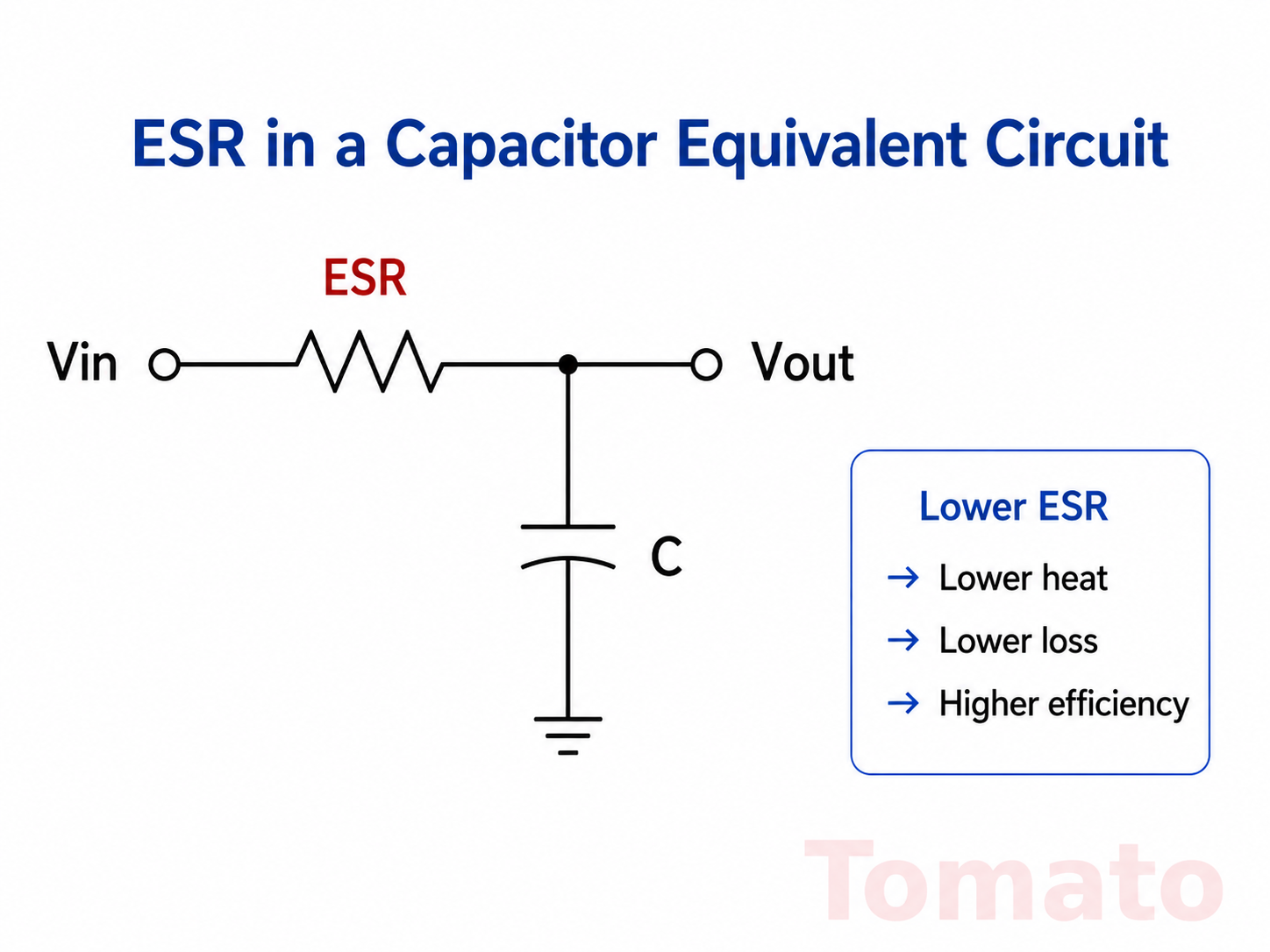
Why Low ESR Matters
- Reduces power loss and internal heat generation
- Improves efficiency in switching power supplies
- Helps maintain stable output voltage
- Supports better thermal performance in demanding circuits
- Can help extend capacitor life by lowering internal stress
In high-frequency or high-current circuits, choosing a capacitor with suitably low ESR can significantly improve overall system reliability.
2. Understanding Ripple Current
Ripple current is the AC current that flows through the capacitor as the circuit repeatedly charges and discharges it. In real power supply designs, ripple current is unavoidable, especially in converter input and output stages.
If the ripple current is too high for the selected capacitor, the part will run hotter, and excess heat can accelerate electrolyte evaporation, reduce capacitance over time, and shorten useful life.
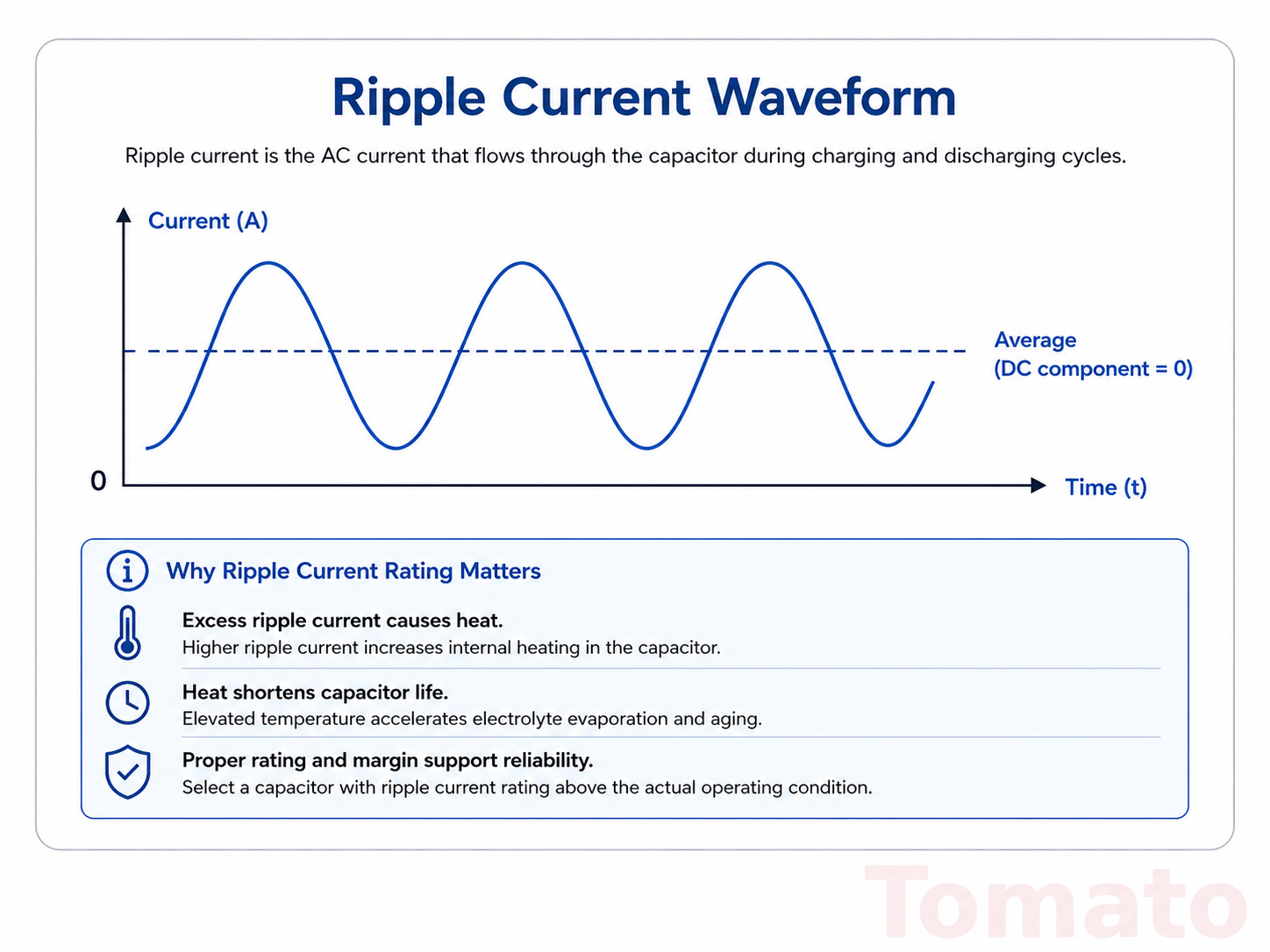
Why Ripple Current Rating Matters
- Too much ripple current causes excess heat
- Higher internal temperature reduces long-term reliability
- Heat can accelerate electrolyte drying and performance drop
- Insufficient ripple capability may lead to early failure
- Proper ripple margin supports stable long-term operation
How to Select
- Check the ripple current rating at the relevant frequency and temperature
- Make sure actual circuit ripple current stays below the rated value with margin
- Review thermal conditions, not just electrical values
3. Lifetime: Ensuring Long-Term Reliability
Aluminum electrolytic capacitors are usually specified with a rated lifetime under defined test conditions, often at the maximum rated temperature. That lifetime does not automatically represent actual field life, because real operating life depends on several factors.
Operating temperature, ripple current, applied voltage, and the surrounding environment all affect how long the capacitor will remain stable in service. In industrial equipment and long-running power systems, lifetime is often one of the most important selection criteria.
Key Factors That Affect Lifetime
- Operating temperature
- Ripple current and self-heating
- Applied voltage
- Ambient environment and ventilation
- Overall system duty cycle
A useful rule of thumb is that for every 10°C decrease in operating temperature, capacitor lifetime may approximately double. This is why thermal margin matters so much in practical designs.
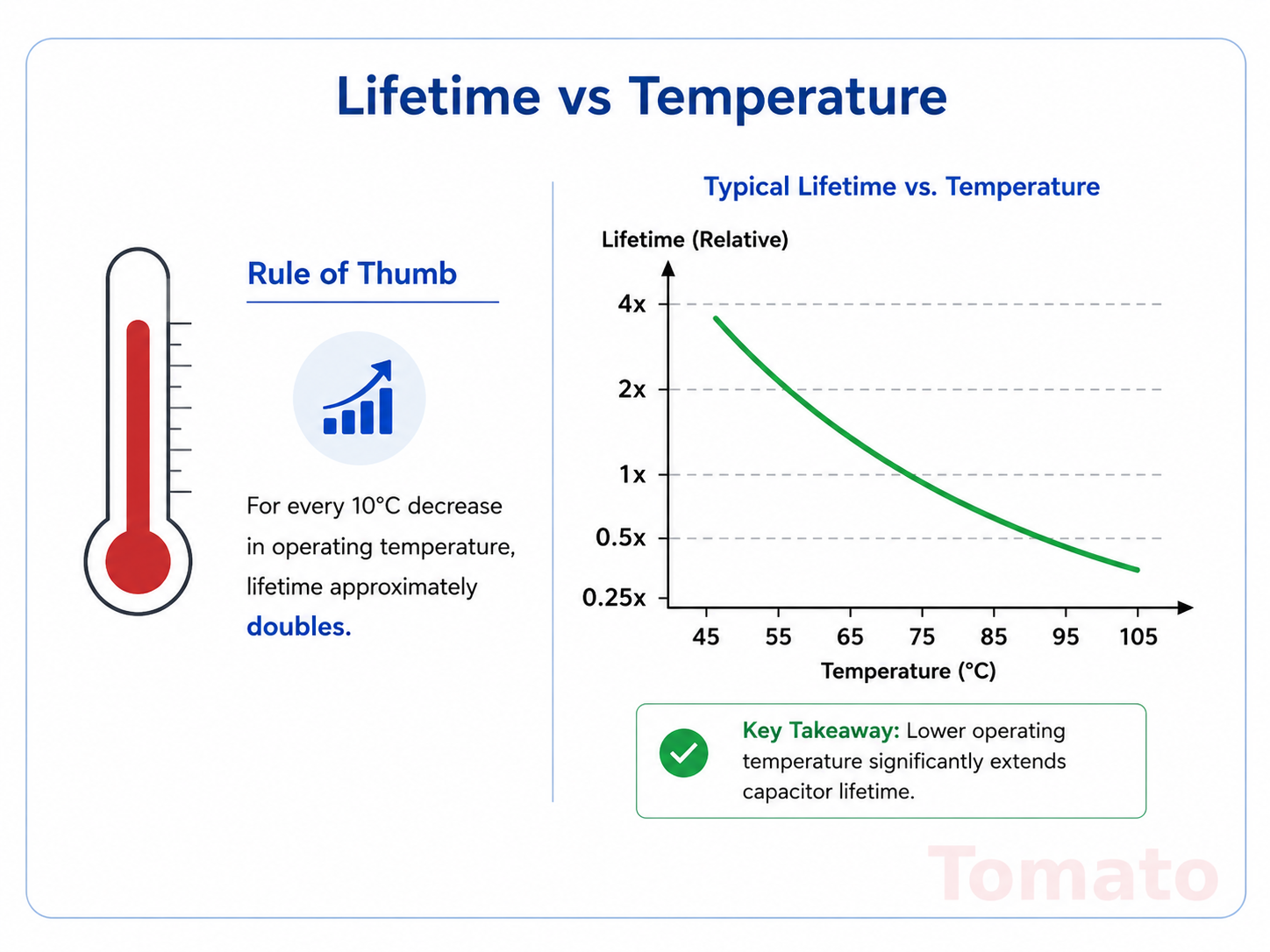
Always review the datasheet lifetime conditions carefully. A capacitor rated for 2000 hours at 105°C may last far longer in a cooler real-world environment, but only if ripple current and installation conditions are also properly controlled.
4. How These Factors Work Together
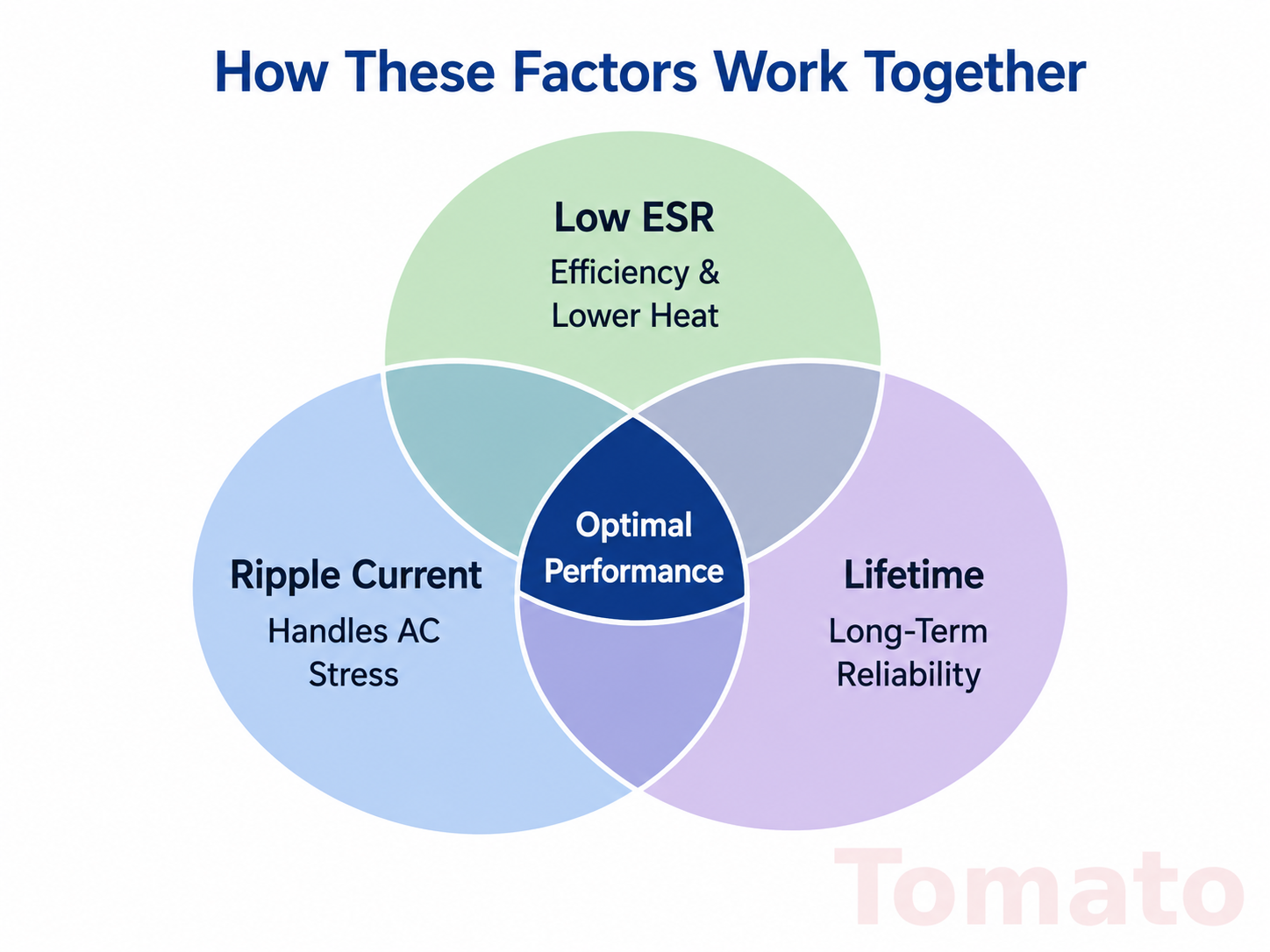
Low ESR, adequate ripple current rating, and suitable lifetime are closely connected. These factors should never be reviewed in isolation.
A capacitor with low ESR but insufficient ripple current capability can still overheat. A capacitor with strong ripple-current performance but poor thermal conditions may still have a short field life. A capacitor with an acceptable lifetime rating may still fail too early if operating temperature is too high.
In real design work, the best capacitor is not always the one with the highest capacitance or the lowest ESR. The correct choice is the one that balances efficiency, thermal behavior, ripple handling, expected service life, and actual application conditions.
5. Practical Selection Checklist
Before confirming a capacitor for production, engineers and buyers should review the following selection points together:
| Selection Point | What to Check |
|---|---|
| Capacitance & Voltage | Confirm the value meets circuit requirements with adequate design margin. |
| Low ESR | Choose a level that supports efficiency and acceptable temperature rise. |
| Ripple Current Rating | Make sure the rated ripple current is higher than actual circuit ripple current with margin. |
| Lifetime & Temperature | Match the capacitor's endurance target to the real operating condition. |
| Size & Mounting Type | Check whether the package fits PCB layout, height limits, and installation method. |
| Quality & Series | Prefer reliable brands and proven capacitor series for long-term stability. |
Conclusion
When selecting aluminum electrolytic capacitors, Low ESR, Ripple Current, and Lifetime are the three factors that most strongly affect efficiency, stable performance, and long-term durability.
For engineers and sourcing teams, the best result comes from balancing these factors according to the real circuit condition instead of focusing on only one headline specification. If you are evaluating capacitor options, you can also read Panasonic Aluminum Electrolytic Capacitors: Types, Features, and Applications, review Panasonic Hybrid Aluminum Electrolytic Capacitors: Benefits, Applications, and Selection Tips, compare Surface Mount vs Radial Lead Aluminum Electrolytic Capacitors: Key Differences and How to Choose, visit the TomatoElec homepage, or contact us through the contact page.