
Available 24/7 at
0755-82798135

LR44 Battery Equivalent Guide: AG13, A76, 357, SR44, and Compatible Button Cell Batteries
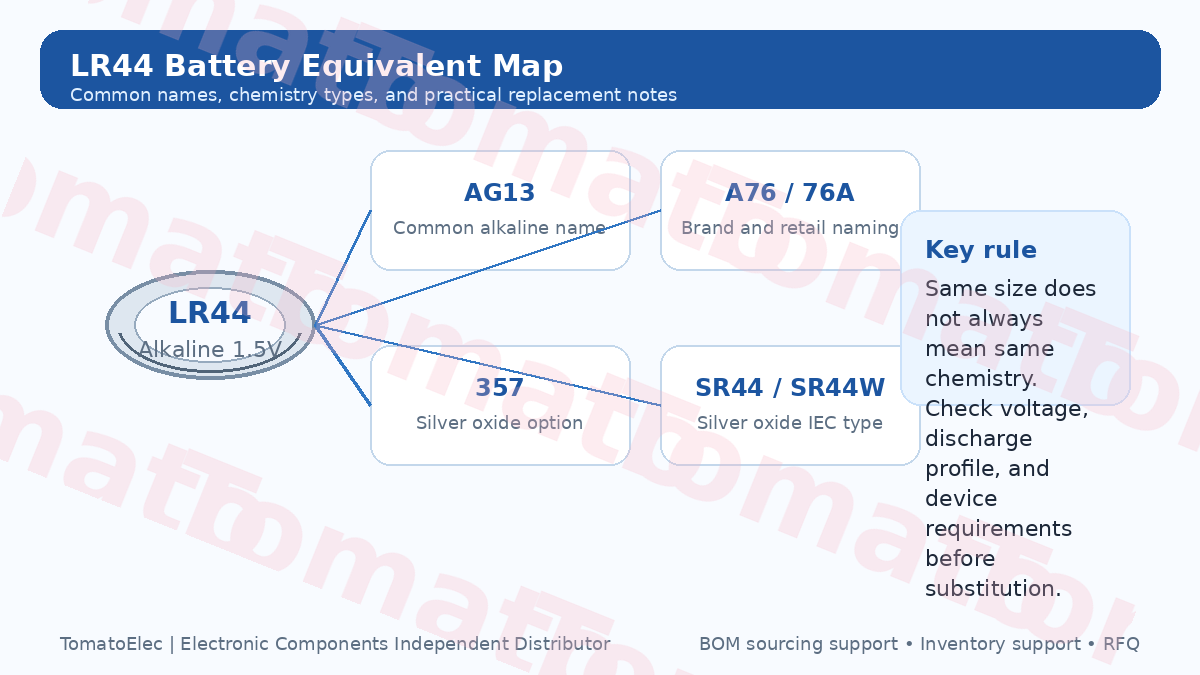
Small button cell batteries often appear under several different names, and LR44 is one of the most common examples. Buyers may see LR44, AG13, A76, 76A, 357, SR44, SR44W, or 303 listed for small electronic devices, calculators, toys, measuring tools, watches, and compact consumer products.
These names can be confusing because some are true alkaline equivalents, while others are same-size silver oxide alternatives. The physical size may be compatible, but the chemistry, voltage stability, discharge curve, runtime, and cost can be different.
This guide explains the practical differences between LR44, AG13, A76, 357, SR44, and compatible button cell batteries so that engineers, buyers, and sourcing teams can choose a safer replacement option and avoid simple cross-reference mistakes.
What is an LR44 battery?
LR44 is a small alkaline button cell battery. It is commonly used in low-power and intermittent-use devices where compact size, low cost, and simple replacement are important. Typical applications include calculators, toys, small LED devices, thermometers, digital calipers, laser pointers, and other compact electronic products.
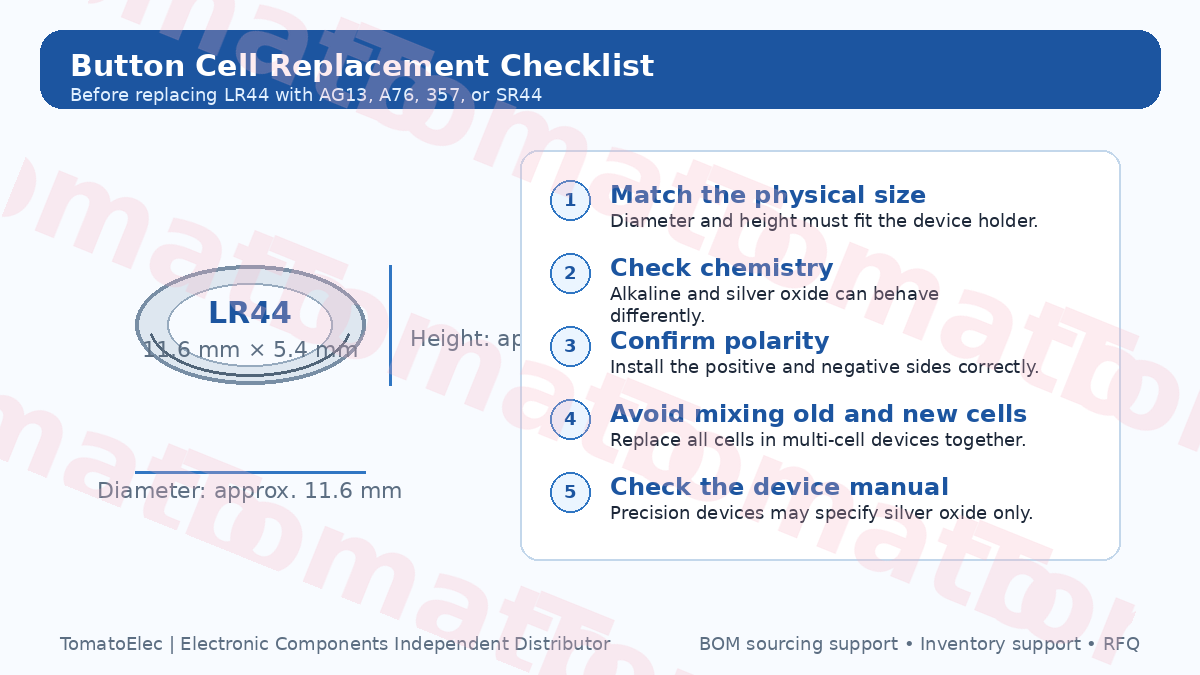
The LR44 size family is usually around 11.6 mm in diameter and about 5.4 mm high. However, buyers should always check the device manual, battery holder tolerance, and original battery marking before replacing a cell. A battery that fits mechanically may still have a different chemistry or discharge behavior.
Quick LR44 equivalent list
The most common LR44 equivalents and related names are listed below. This table separates direct alkaline replacements from same-size silver oxide alternatives.
| Battery marking | Common type | Replacement note |
|---|---|---|
| LR44 | Alkaline button cell | Original common IEC-style marking for this alkaline size family. |
| AG13 | Alkaline button cell | Common direct replacement name for LR44 in many consumer products. |
| A76 / 76A | Alkaline button cell | Often used by battery brands and retail packaging for the LR44 equivalent size. |
| L1154 / LR1154 | Alkaline button cell | Another common marking associated with the same general LR44 size family. |
| 357 | Silver oxide button cell | Same-size alternative in many devices, but not the same chemistry as LR44. |
| SR44 / SR44W / SR44SW | Silver oxide button cell | Often selected when voltage stability and longer service life are more important. |
| 303 | Silver oxide button cell | Frequently grouped with 357 in replacement charts, but device requirements should still be checked. |
LR44 vs AG13 vs A76
LR44, AG13, and A76 are generally treated as direct alkaline equivalents. For many basic devices, these markings refer to the same practical replacement size and nominal voltage class. If a toy, calculator, or small electronic accessory originally uses LR44, an AG13 or A76 battery is usually the first equivalent buyers look for.
The main difference is naming. LR44 is widely used as a technical or IEC-style reference, AG13 is common in generic button cell packaging, and A76 or 76A is often used by well-known battery brands. In procurement, it is better to search for all three names to improve supply availability and avoid missing compatible stock.
LR44 vs 357 and SR44
The 357 and SR44 family is often listed as compatible with LR44 because the physical size is very close. In many devices, a 357 or SR44 cell can fit into the same holder as an LR44 battery. However, this is not a perfect one-to-one chemistry replacement.
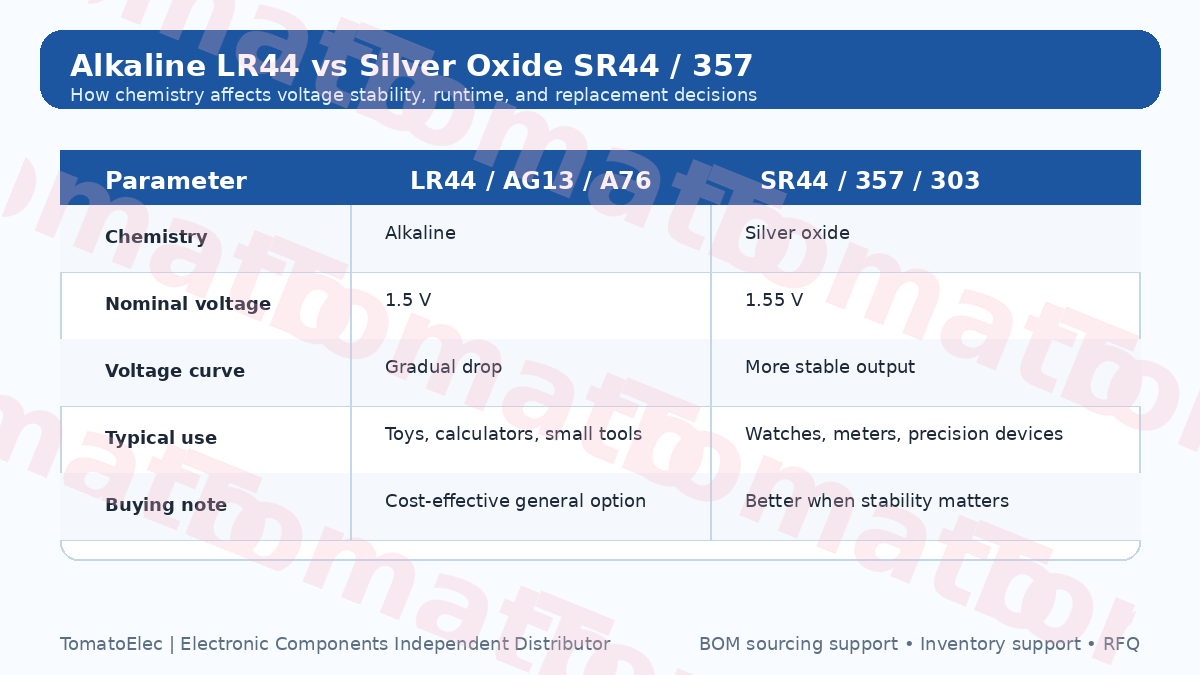
LR44 is alkaline, while 357 and SR44 are silver oxide cells. Silver oxide cells usually provide a more stable voltage curve during discharge and are often preferred in watches, meters, medical-style consumer devices, precision instruments, and other applications where stable output matters.
This means 357 or SR44 can be a higher-performance replacement in many cases, but buyers should not assume it is always required or always approved. When replacing batteries in calibrated equipment, timing devices, measuring tools, or customer-facing products, check the original device documentation before switching chemistry.
Alkaline vs silver oxide button cells
The key difference between LR44-type alkaline cells and SR44-type silver oxide cells is not only the name. It is the discharge behavior. Alkaline cells are cost-effective and widely used, but their voltage gradually drops as the battery is discharged. Silver oxide cells typically maintain a flatter voltage profile for a longer period.
For low-cost toys, small lights, and general electronic accessories, alkaline LR44, AG13, or A76 batteries may be sufficient. For watches, measuring tools, compact meters, or products sensitive to voltage drop, silver oxide 357 or SR44 cells may deliver more consistent performance.
Procurement teams should also consider price, shelf life, packaging quantity, brand requirements, and export compliance. A cheaper alkaline option may be acceptable for general use, while a silver oxide option may reduce performance complaints in precision applications.
Common applications
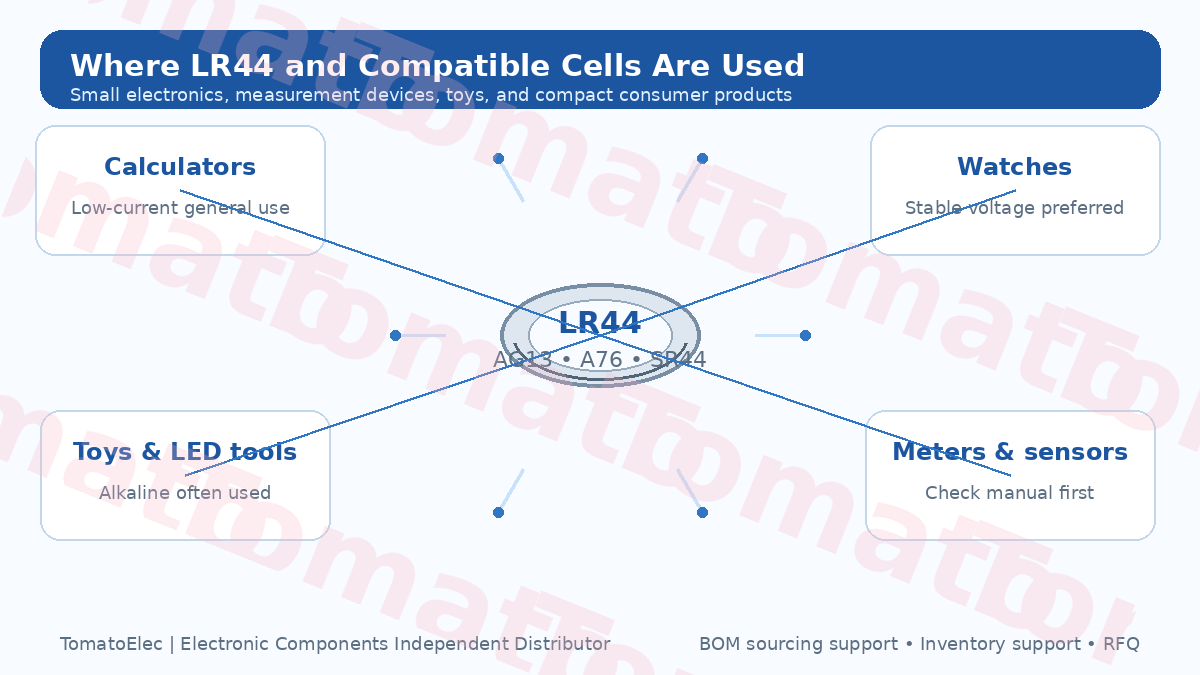
LR44 and compatible button cell batteries are commonly used in small devices where space is limited and current demand is relatively low. Typical applications include calculators, thermometers, small remote controls, toys, LED accessories, mini flashlights, digital calipers, compact meters, and some personal care devices.
Watches and precision instruments often require more careful selection. Even when the battery size is compatible, the original manufacturer may specify a silver oxide cell because of its stable discharge curve. For these applications, replacing an SR44 or 357 with a low-cost alkaline LR44 may shorten runtime or affect device behavior.
Replacement checklist
Before replacing an LR44, AG13, A76, 357, or SR44 battery, use the checklist below:
- Check the original marking: Do not rely only on appearance. Read the marking on the old battery or the device label.
- Confirm the size: The common LR44 size family is about 11.6 mm in diameter and about 5.4 mm high, but holders can vary.
- Match the chemistry when needed: Use alkaline for general LR44, AG13, and A76 replacements. Use silver oxide when the device specifies SR44, 357, or 303.
- Check polarity: Install the positive and negative sides correctly to avoid device failure.
- Replace cells together: If the device uses multiple button cells, avoid mixing old and new batteries.
- Review the device manual: For meters, watches, and precision devices, follow the manufacturer recommendation.
Procurement and sourcing notes
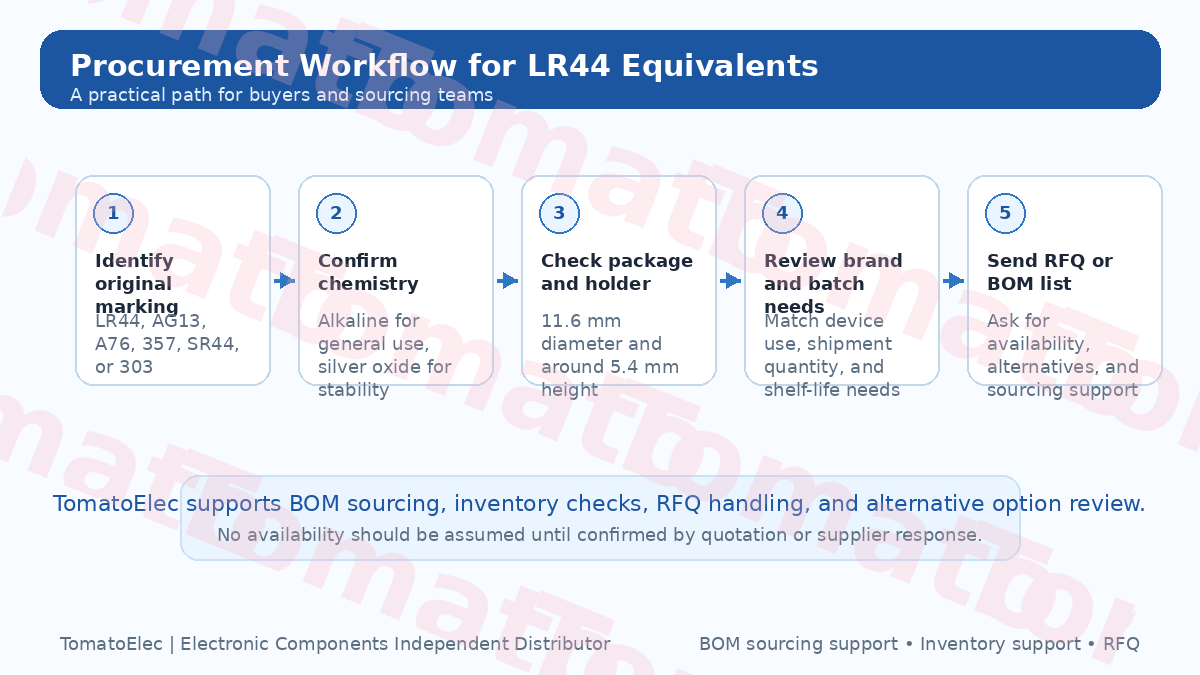
For buyers and sourcing teams, LR44 equivalents should be handled as a cross-reference decision rather than a simple keyword match. A supplier listing may include LR44, AG13, A76, 357, SR44, or 303 in the same title, but that does not always mean every option has identical chemistry or performance.
When preparing a purchase request, include the original battery marking, target chemistry, preferred brand, packaging quantity, application type, and any device-specific requirements. This helps suppliers confirm whether the requested cell is a direct alkaline replacement or a silver oxide alternative.
TomatoElec supports electronic components sourcing, BOM sourcing support, and inventory support for buyers and procurement teams. If you need button cell batteries or related electronic components, you can submit a request through the RFQ page or contact us to check availability and alternative options.
Final recommendation
If your device originally uses LR44, the safest first choices are usually AG13, A76, 76A, L1154, or LR1154 alkaline button cells. If you need better voltage stability or the device originally specifies SR44, 357, or 303, a silver oxide battery from the SR44 family may be the better option.
The practical rule is simple: match the size first, then confirm the chemistry, voltage behavior, and device requirement. For general consumer devices, direct alkaline equivalents are often acceptable. For watches, meters, and precision applications, silver oxide alternatives should be reviewed more carefully.
For sourcing teams managing multiple small electronic components, it is useful to keep a cross-reference list and confirm substitute approval before bulk purchasing. TomatoElec can help buyers review equivalent options, check sourcing availability, and support broader BOM requirements, including passive components such as ceramic capacitors, diodes, power management components, and other electronic parts.