
Available 24/7 at
0755-82798135

How to Secure MLCC Supply During Shortages: Package, Capacitance, Voltage, and Alternative Options
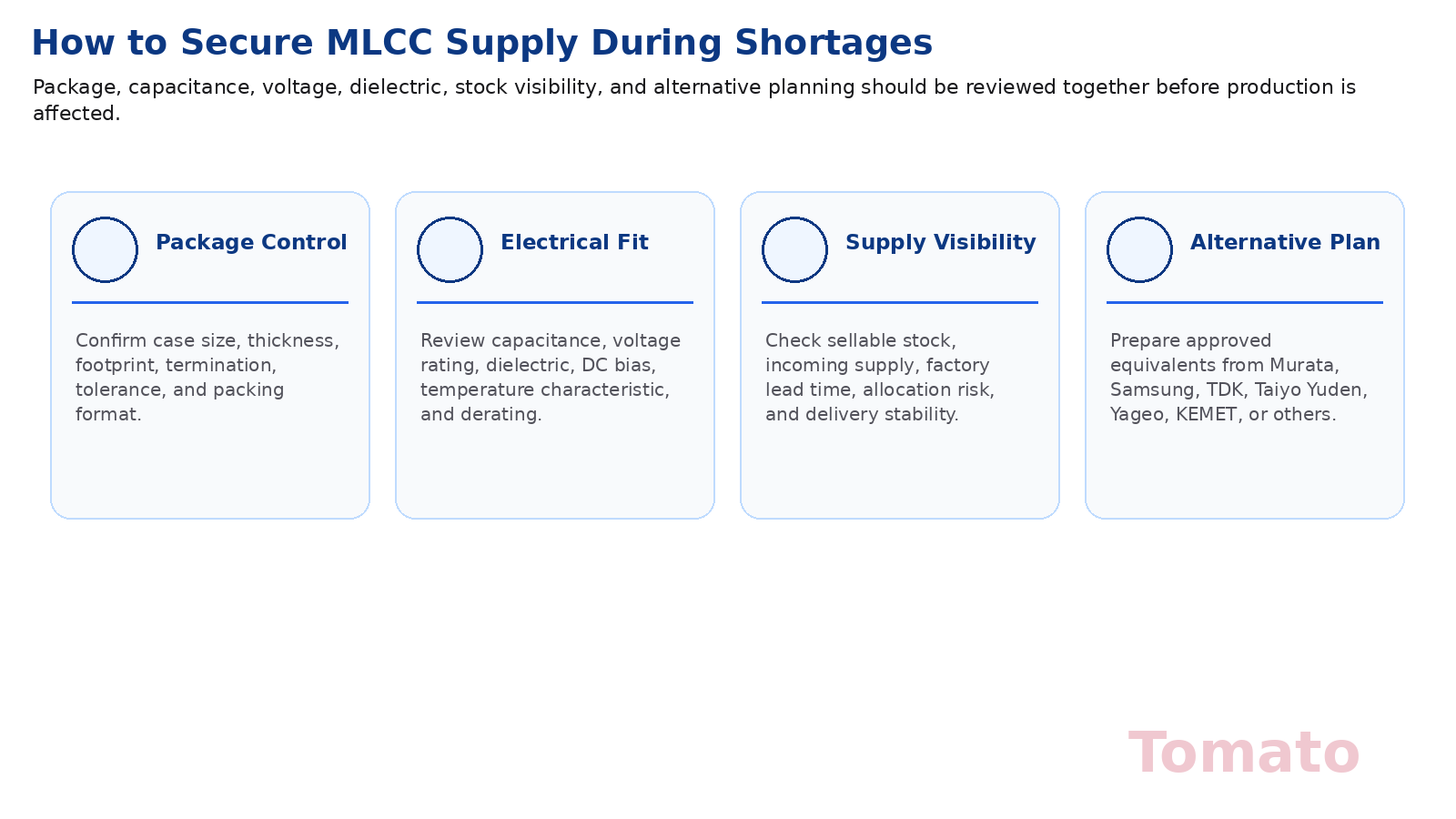
When MLCC availability becomes tight, buyers need more than a quick price comparison. Package, capacitance, voltage rating, dielectric, real stock, lead time, and approved alternatives should all be reviewed before placing an order.
During shortages, the same nominal MLCC value may not be easy to replace. A capacitor with the same capacitance and voltage rating may still differ in case size, thickness, DC bias behavior, temperature characteristic, termination, reliability grade, or qualification status.
This guide explains how to secure MLCC supply during shortages by confirming package, capacitance, voltage, availability, and alternative options before production is affected. For MLCC sourcing support, visit TomatoElec.
1. Why MLCC Shortages Require Earlier Planning
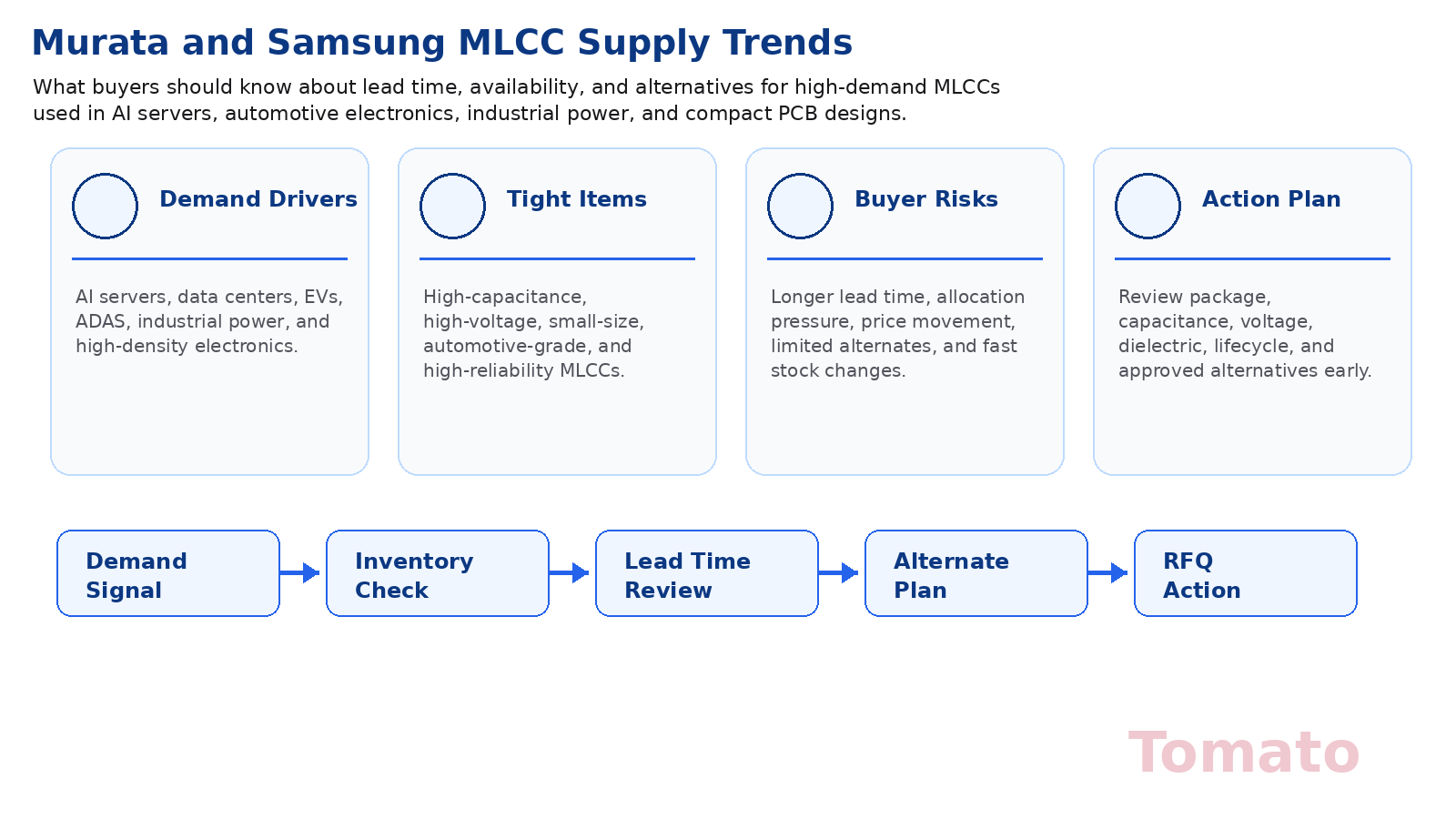
MLCCs are widely used in power supplies, industrial equipment, automotive electronics, communication hardware, AI servers, consumer devices, and compact PCB designs. Because they are used in large quantities across many applications, selected values can become tight quickly when demand rises.
In a normal market, buyers may focus mainly on price and delivery date. In a shortage market, the key question becomes whether the selected MLCC can be supplied repeatedly, whether the visible inventory is truly sellable, and whether an acceptable alternative has already been approved.
Earlier planning helps reduce urgent sourcing pressure. It also gives engineers more time to review alternatives, approve substitutes, or adjust the BOM before the original MLCC becomes difficult to source.
2. Confirm Package Before Comparing Stock
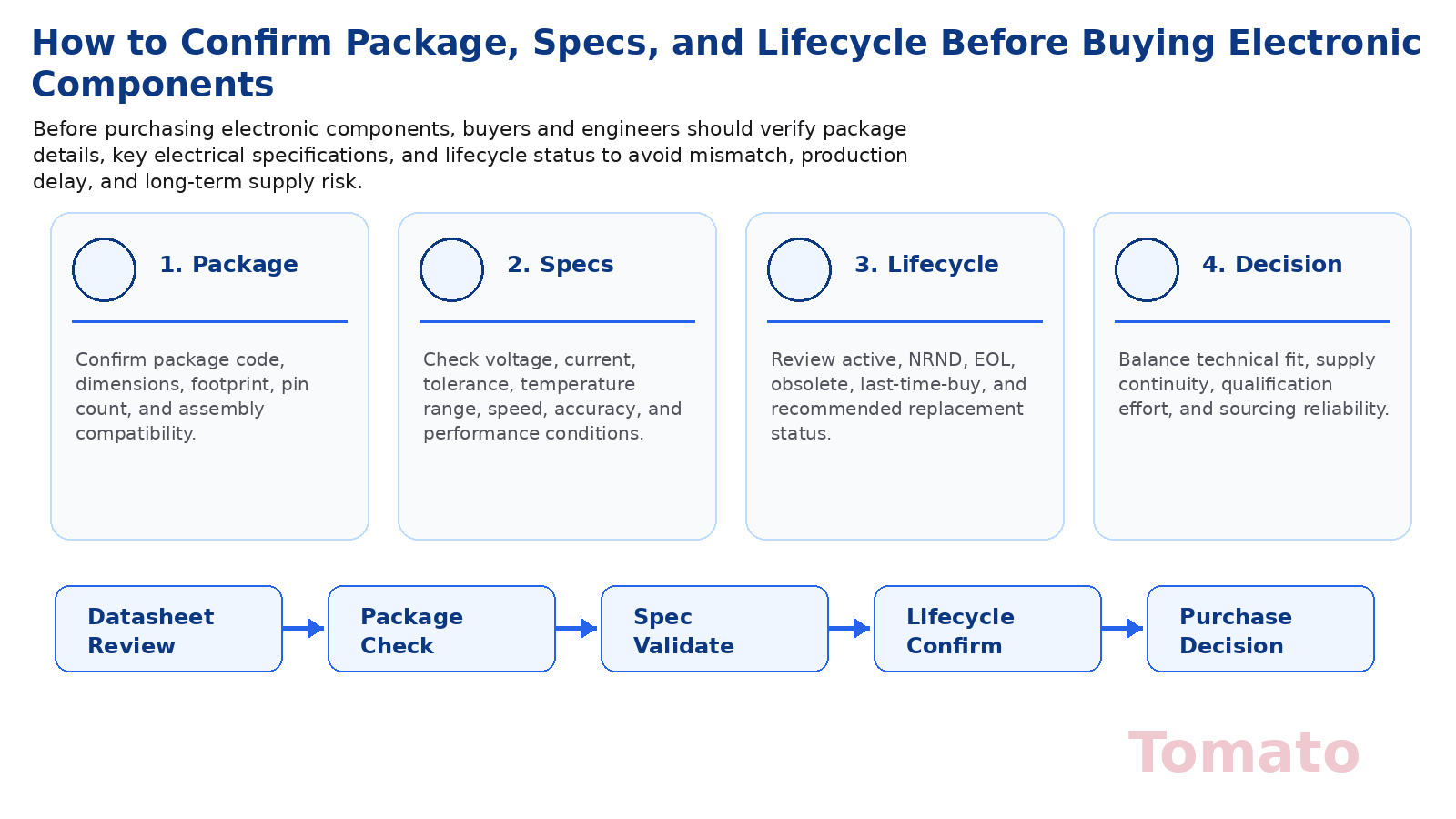
Package confirmation should come before stock comparison. Many MLCCs may appear similar by capacitance and voltage, but different case sizes, thickness options, termination structures, and packing suffixes can make them unsuitable for the same PCB assembly.
Buyers should confirm the full manufacturer part number, package suffix, case size, thickness, footprint, termination type, tolerance, and packing format. Engineers should also check whether soft termination, automotive grade, or special reliability requirements apply.
For production orders, it is risky to assume that a nearby MLCC value or similar package can be used without review. Even a small difference in height, footprint, or dielectric behavior can create assembly or performance issues.
3. Check Capacitance, Voltage, and Dielectric Carefully
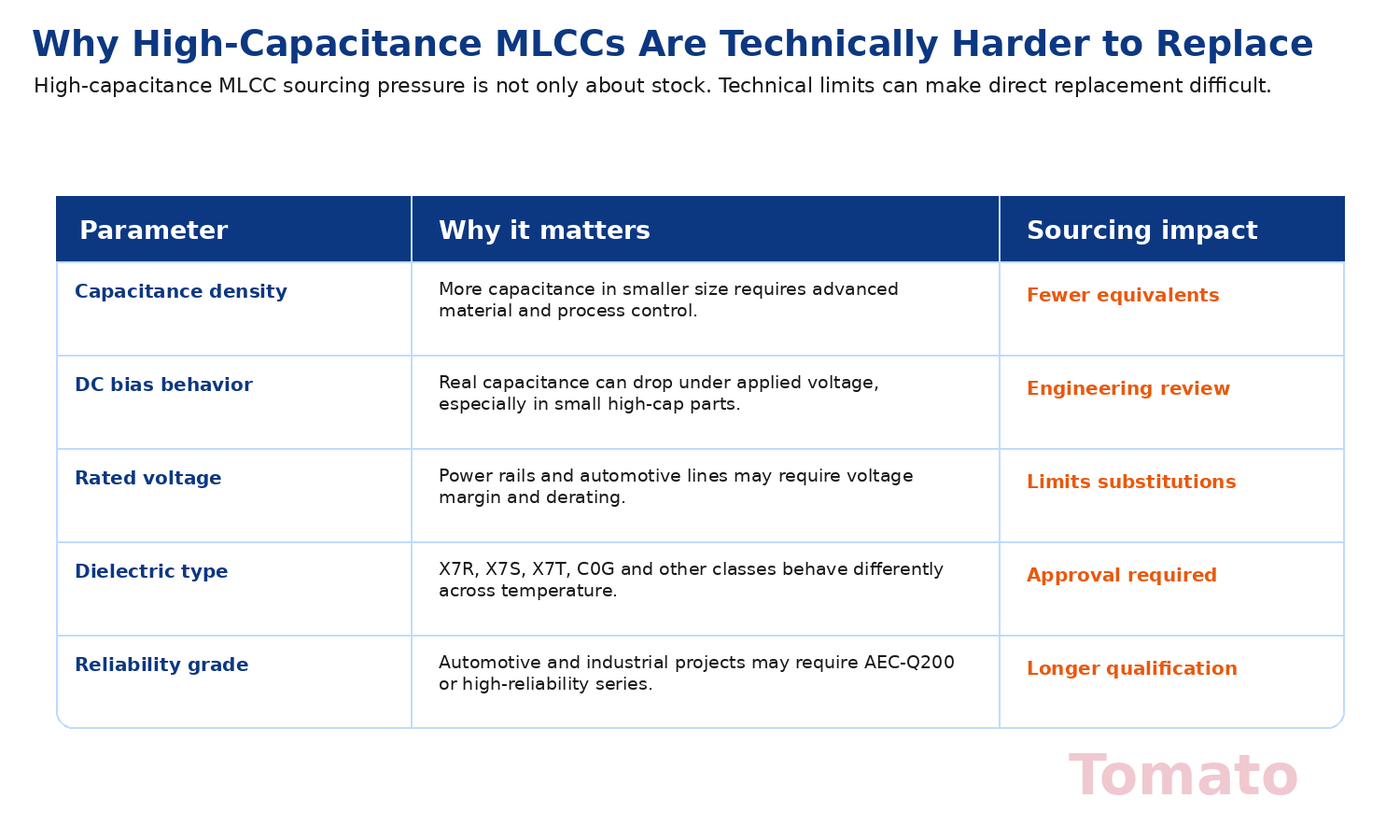
After package confirmation, buyers and engineers should review capacitance, rated voltage, dielectric, tolerance, and temperature characteristic. These parameters directly affect circuit behavior, voltage margin, noise filtering, and long-term reliability.
Capacitance should not be checked only by the nominal value. In many MLCCs, effective capacitance can change under applied DC voltage, temperature, frequency, and operating condition. This is especially important for compact high-capacitance MLCCs used near power rails, processors, or automotive ECUs.
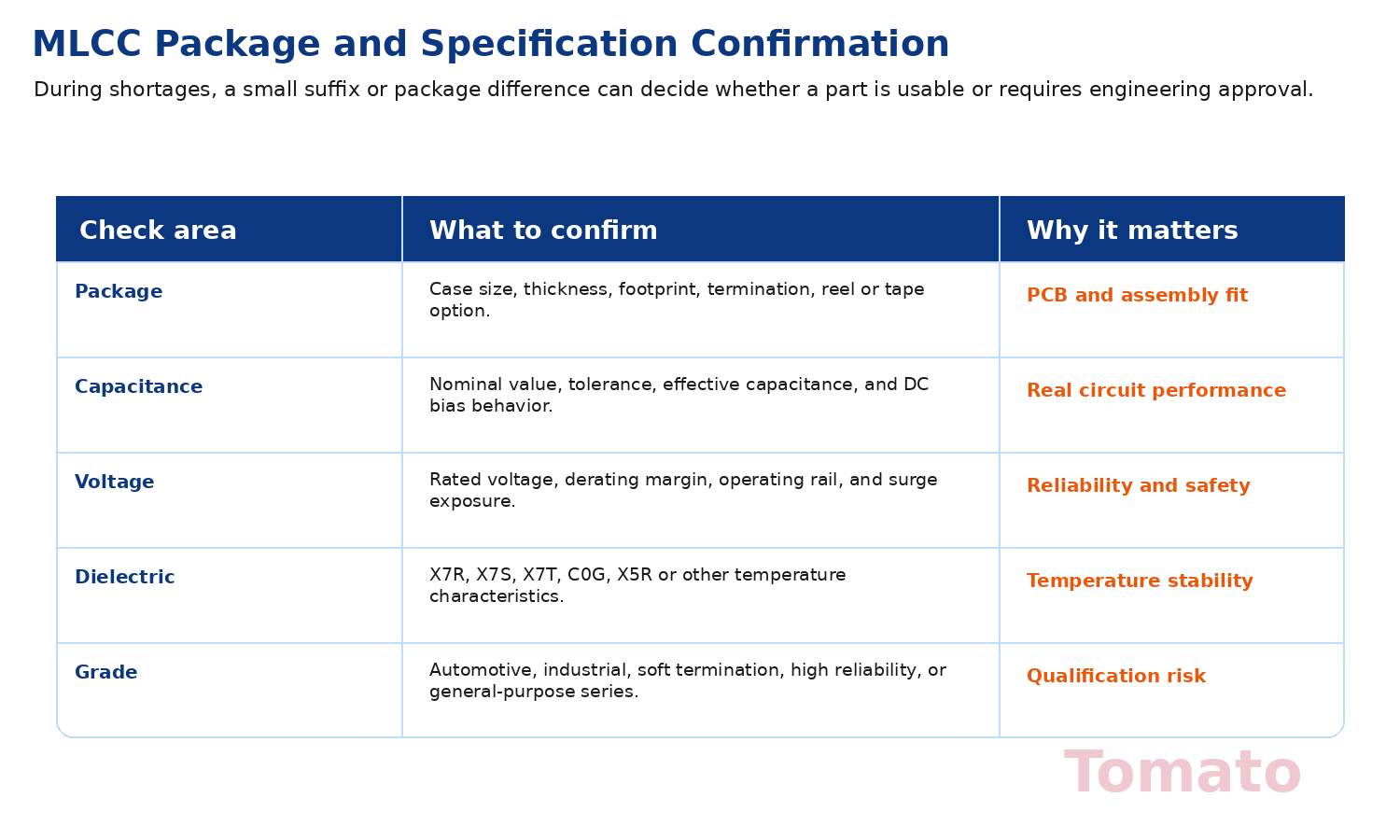
Voltage rating should also be reviewed with derating margin. A replacement MLCC with the same package and capacitance but lower voltage margin may not be suitable for power, automotive, industrial, or high-reliability applications.
Dielectric type is another important factor. X7R, X7S, X7T, X5R, C0G, and other dielectric classes can behave differently across temperature and voltage conditions. Buyers should not treat all ceramic capacitors with the same capacitance as equal substitutes.
4. Evaluate Real Availability and Lead Time
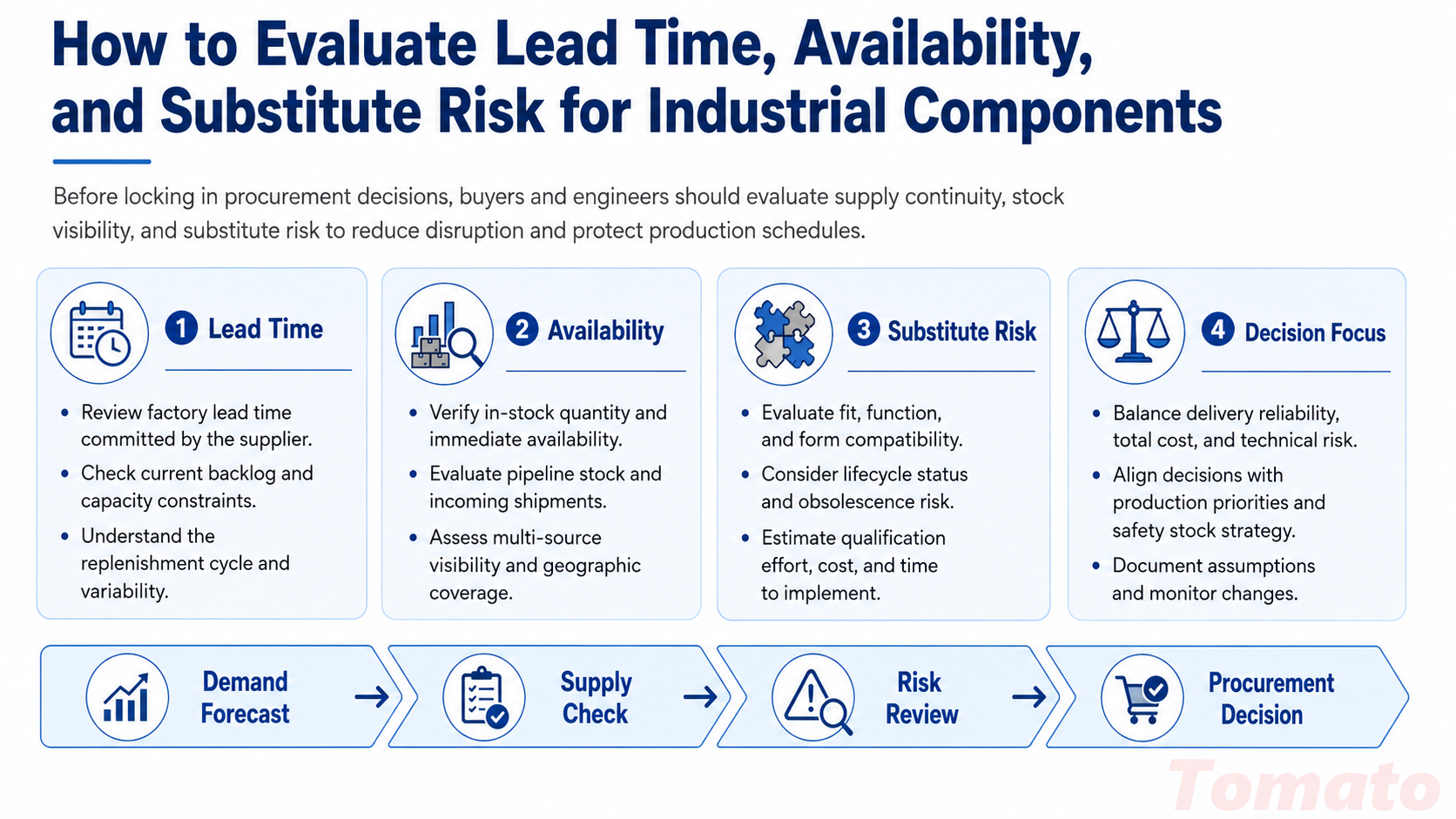
Availability should be reviewed beyond a simple in-stock label. During tight MLCC supply, visible inventory may include reserved stock, region-specific stock, non-sellable quantity, or material that cannot support repeat demand.
A practical review should include current sellable stock, incoming supply, factory lead time, delivery stability, minimum order quantity, packing format, and whether the available quantity can support both immediate demand and future production.
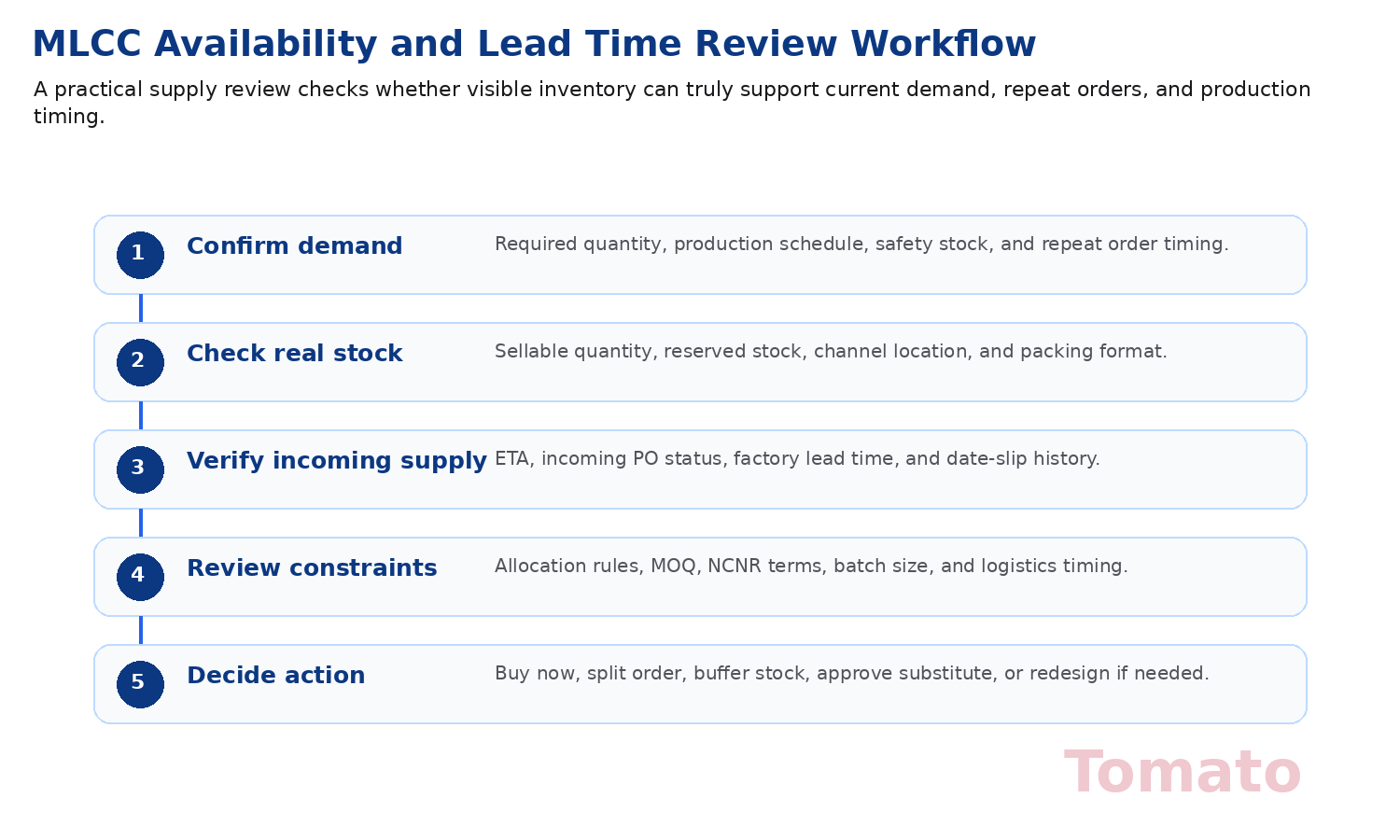
Lead time should also be treated carefully. A quoted lead time can change when allocation pressure increases or when demand from AI server, automotive, industrial, or power applications concentrates on the same MLCC values.
For critical BOM lines, buyers should document supplier assumptions and monitor date changes before placing repeat orders. This helps avoid situations where the first order is delivered but the next production batch has no reliable supply.
5. Plan Alternative MLCC Options
Alternative planning is one of the most important ways to reduce MLCC shortage risk. However, an MLCC alternative should be approved based on fit, form, function, derating, reliability grade, and qualification requirements instead of brand name alone.
In some cases, Murata, Samsung, TDK, Taiyo Yuden, Yageo, KEMET, or other suitable brands may provide comparable MLCC options. But the final choice should be based on actual application conditions, package fit, electrical behavior, and approval process.
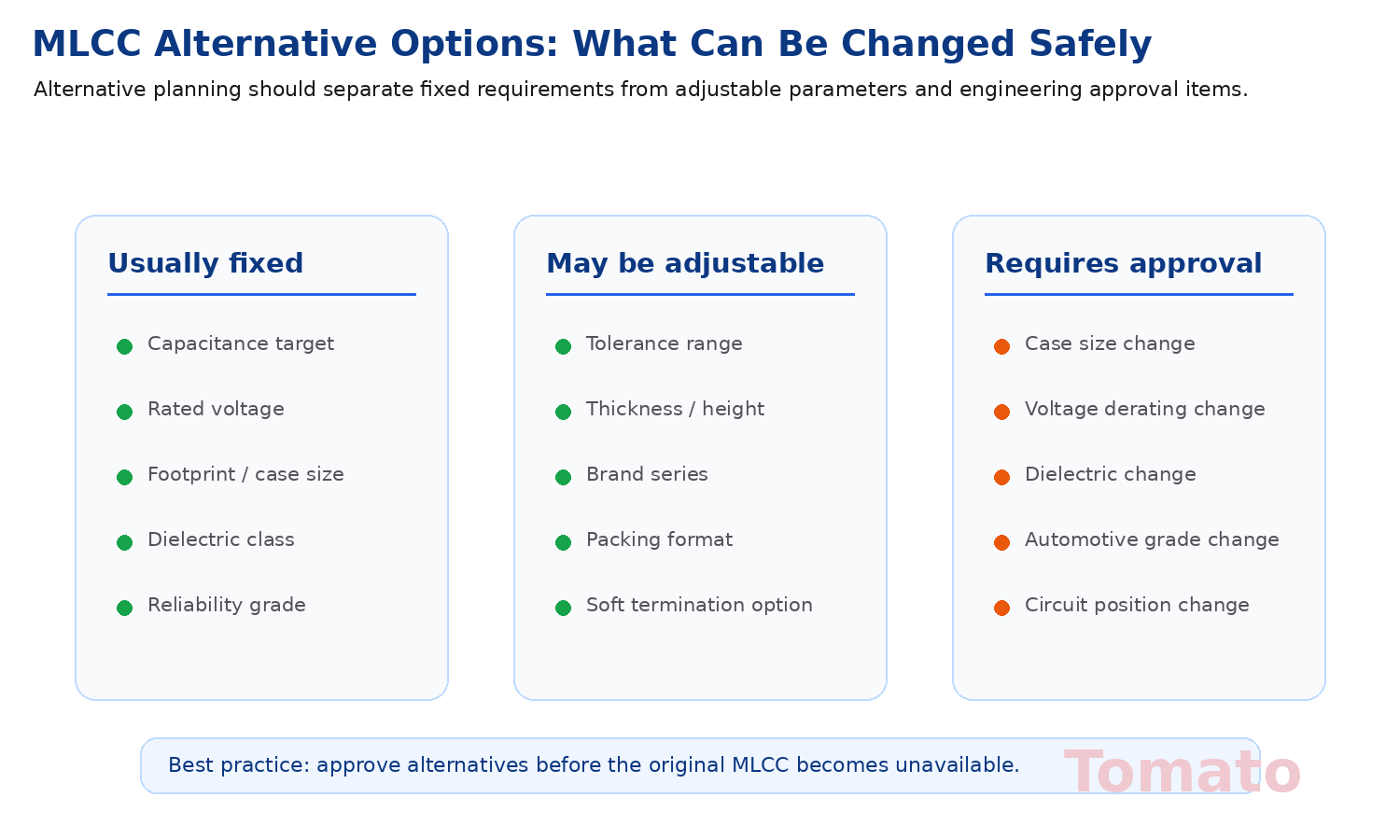
Some parameters are usually fixed, such as capacitance target, voltage rating, case size, dielectric type, and reliability grade. Other parameters, such as tolerance, thickness, packing format, or brand series, may sometimes be adjustable if engineering approves the change.
The best time to approve alternatives is before the original MLCC becomes unavailable. Waiting until shortage pressure becomes urgent can lead to rushed qualification, higher cost, and production delay.
6. Practical MLCC Shortage Buyer Checklist
Before purchasing MLCCs during tight supply conditions, review the following checklist:
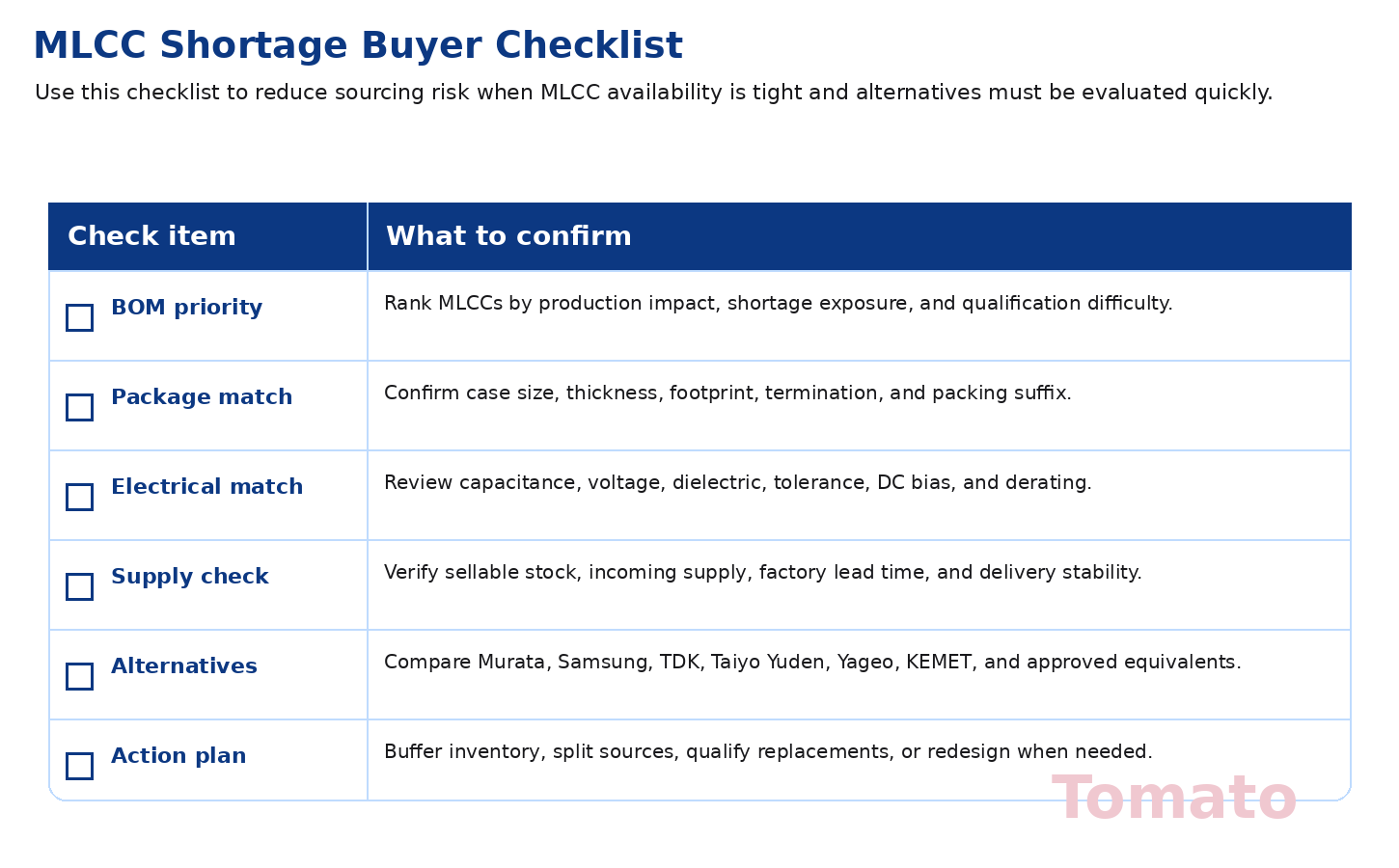
- Rank MLCCs by production impact, shortage exposure, and qualification difficulty.
- Confirm the full manufacturer part number, package suffix, and packing format.
- Check case size, thickness, footprint, termination, and assembly requirements.
- Review capacitance, voltage rating, dielectric, tolerance, DC bias behavior, and derating margin.
- Verify current sellable stock, incoming supply, factory lead time, and delivery stability.
- Compare approved alternatives from Murata, Samsung, TDK, Taiyo Yuden, Yageo, KEMET, or other suitable brands.
- Evaluate substitute risk based on fit, form, function, reliability grade, and qualification effort.
- Prepare buffer stock, split sources, approve replacements, or adjust the design when needed.
7. Conclusion
Securing MLCC supply during shortages requires more than finding visible stock. Buyers should confirm package, capacitance, voltage, dielectric, lead time, availability, and alternative options before production schedules are at risk.
A careful MLCC sourcing process can help reduce wrong-part risk, improve BOM continuity, and give engineering teams enough time to qualify suitable alternatives. Early planning is especially important for high-capacitance, high-voltage, automotive-grade, compact-size, and power-related MLCCs.
If you are reviewing MLCC sourcing options during tight supply conditions, visit the TomatoElec homepage or contact us through the contact page.