
Available 24/7 at
0755-82798135

How to Confirm Package, Specs, and Lifecycle Before Buying Electronic Components
Before buying electronic components, buyers and engineers should confirm more than just the part number and price. Package details, electrical specifications, and lifecycle status can directly affect PCB compatibility, product reliability, and long-term supply continuity.
In real sourcing work, many problems come from small differences that are easy to overlook, such as package suffix, pin count, temperature grade, reel option, lifecycle status, or datasheet revision. These details can decide whether a component fits the board, meets the design requirement, and remains available during production.
This guide explains how to confirm package, specs, and lifecycle before buying electronic components, and how to reduce wrong-part risk before placing an order. For more component sourcing support, visit TomatoElec.
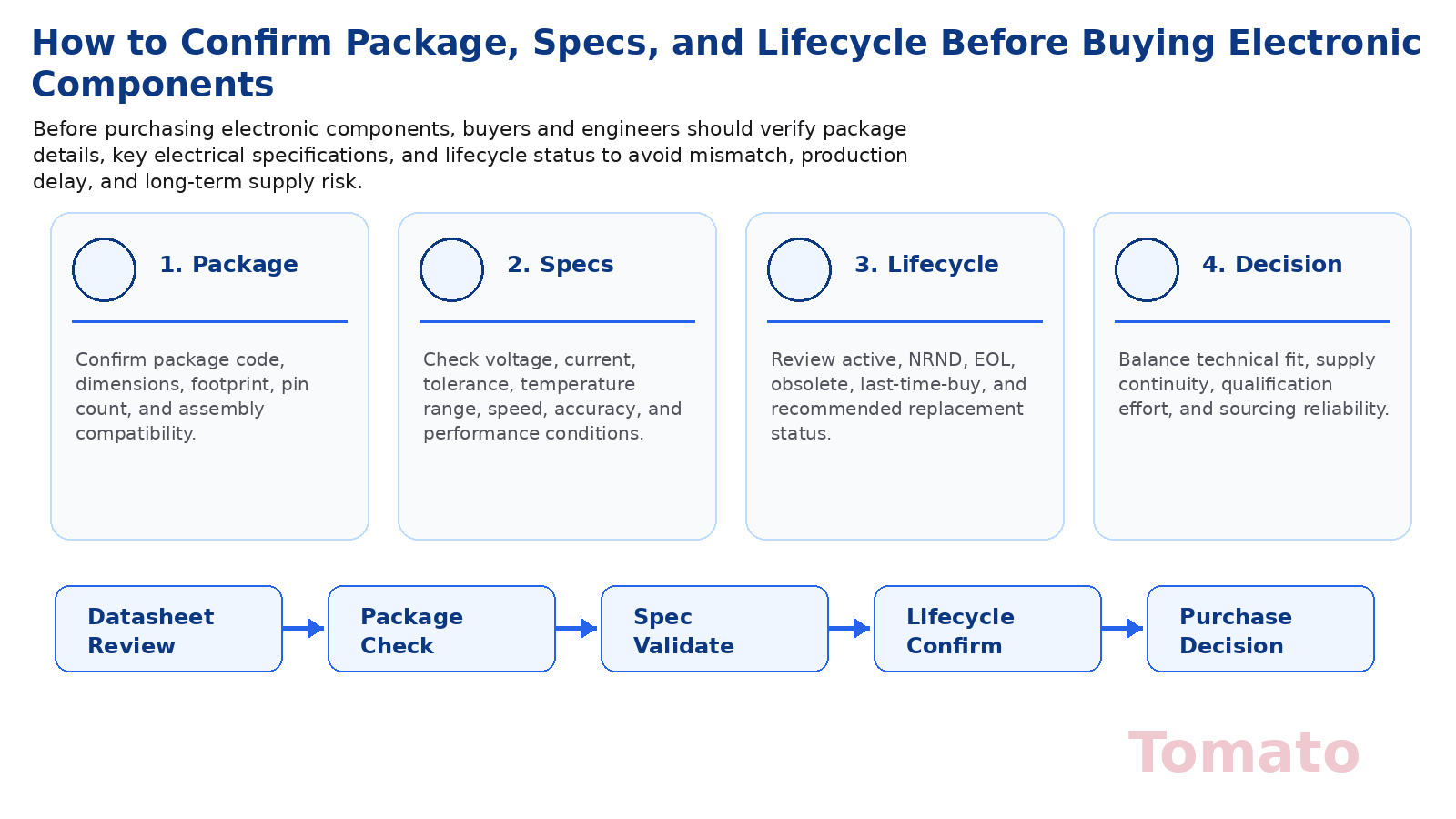
1. Why Package, Specs, and Lifecycle Checks Matter
A component purchase can look correct at first glance but still create serious problems if the package, specifications, or lifecycle status are not verified carefully. A wrong package may not fit the PCB. A slightly different specification may fail under real operating conditions. A part near end-of-life may create future production risk.
For industrial and production projects, the cost of a wrong component is not only the cost of the part itself. It may also include redesign time, delayed production, extra qualification work, urgent replacement sourcing, and customer delivery pressure.
That is why buyers and engineers should treat package confirmation, specification validation, and lifecycle review as one pre-purchase process instead of three separate checks.
2. How to Confirm the Correct Package
The first step is to confirm the exact package, not just the package family. A part may be described as SOIC, TSSOP, QFN, DFN, SOT, or TO package, but different suffixes can mean different body size, pin count, pitch, thermal pad, packing method, or footprint requirement.
Buyers should confirm the manufacturer part number suffix, package code, mechanical drawing, land pattern, and packing format. Engineers should also check pin 1 orientation, pinout, thermal pad requirements, soldering notes, and assembly compatibility.
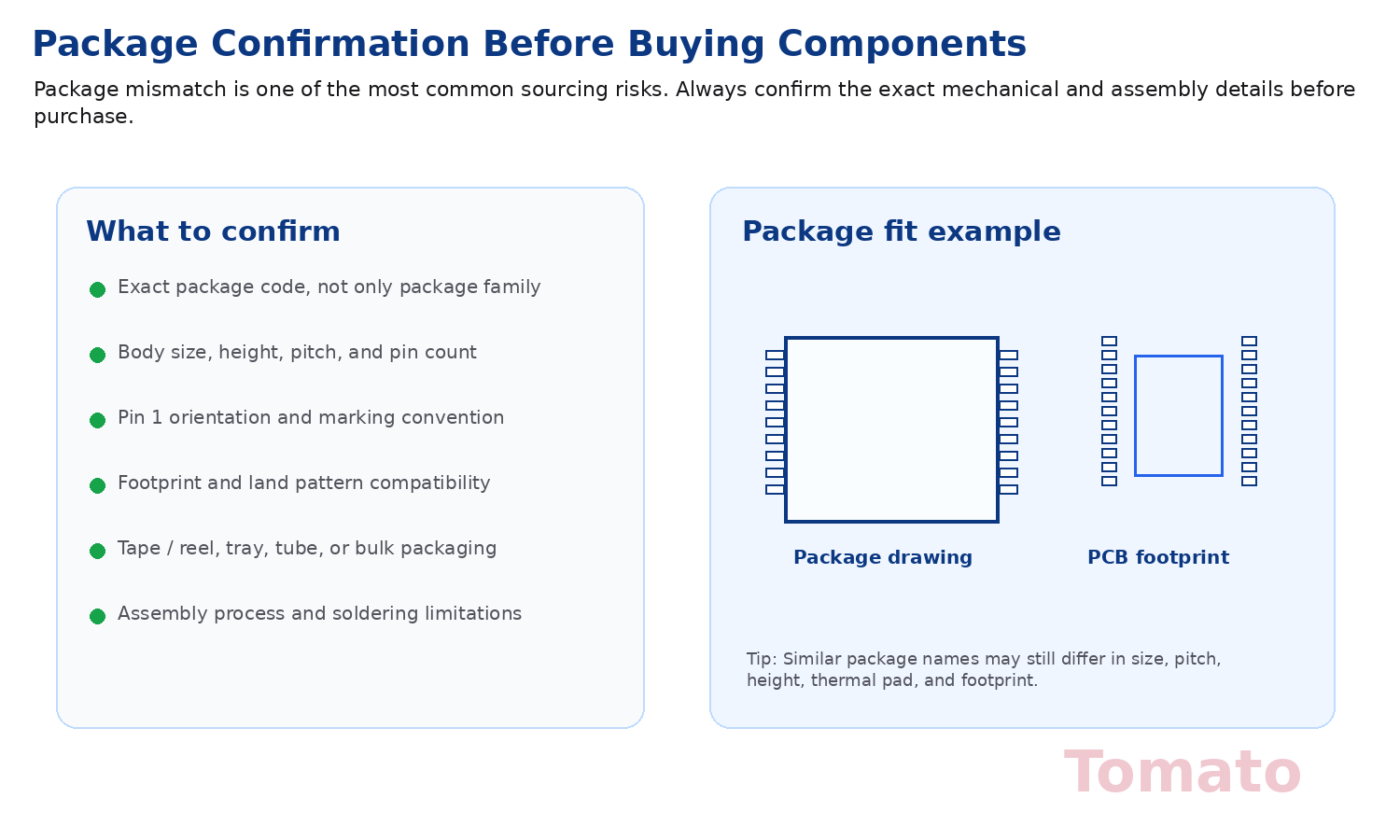
For PCB-mounted components, package confirmation should include both the physical package and the footprint. A component that has the right electrical function but the wrong footprint can still become unusable for production.
3. How to Verify Key Specifications
After confirming the package, the next step is to verify the actual specifications against the application requirement. Buyers should not rely only on a short product title or a marketplace description. The official datasheet and manufacturer information should be reviewed when possible.
Key specifications may include voltage rating, current rating, power rating, tolerance, speed, frequency range, accuracy, ESR, capacitance, resistance, temperature range, interface type, timing requirement, and reliability grade depending on the component category.
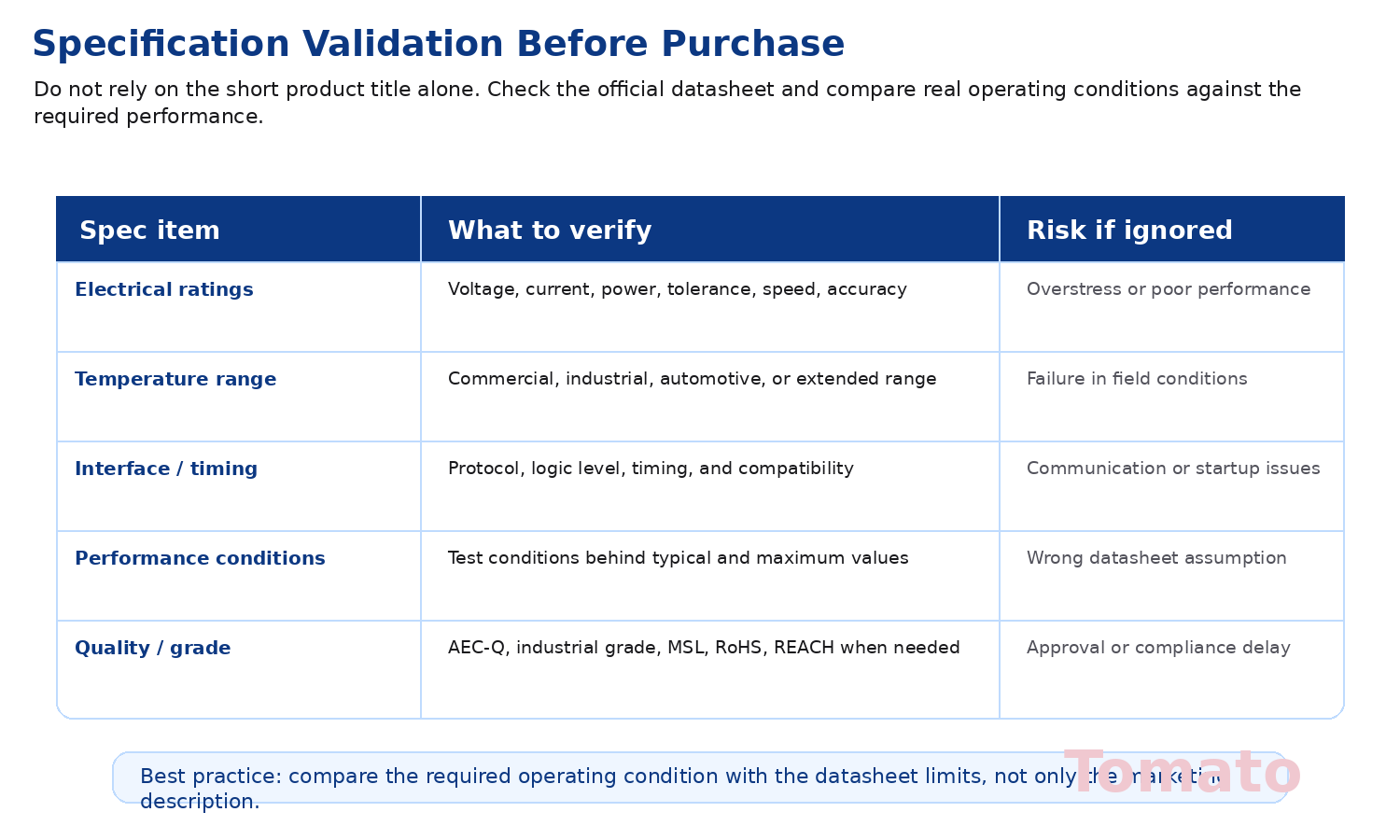
It is also important to check the conditions behind the specification. A typical value, maximum value, or test-condition value may not represent the actual use case. For critical designs, engineers should compare datasheet limits with real operating voltage, current, temperature, load, and lifetime requirements.
4. How to Check Lifecycle Status
Lifecycle status is especially important for industrial products, long-term maintenance projects, and BOMs that may run for several years. A component may still be available today but already be marked as NRND, EOL, last-time-buy, or obsolete.
Before purchase, buyers should check whether the part is active, not recommended for new designs, end-of-life, or obsolete. It is also useful to review recommended replacements, last-time-buy information, and whether the manufacturer still supports the part for new production.
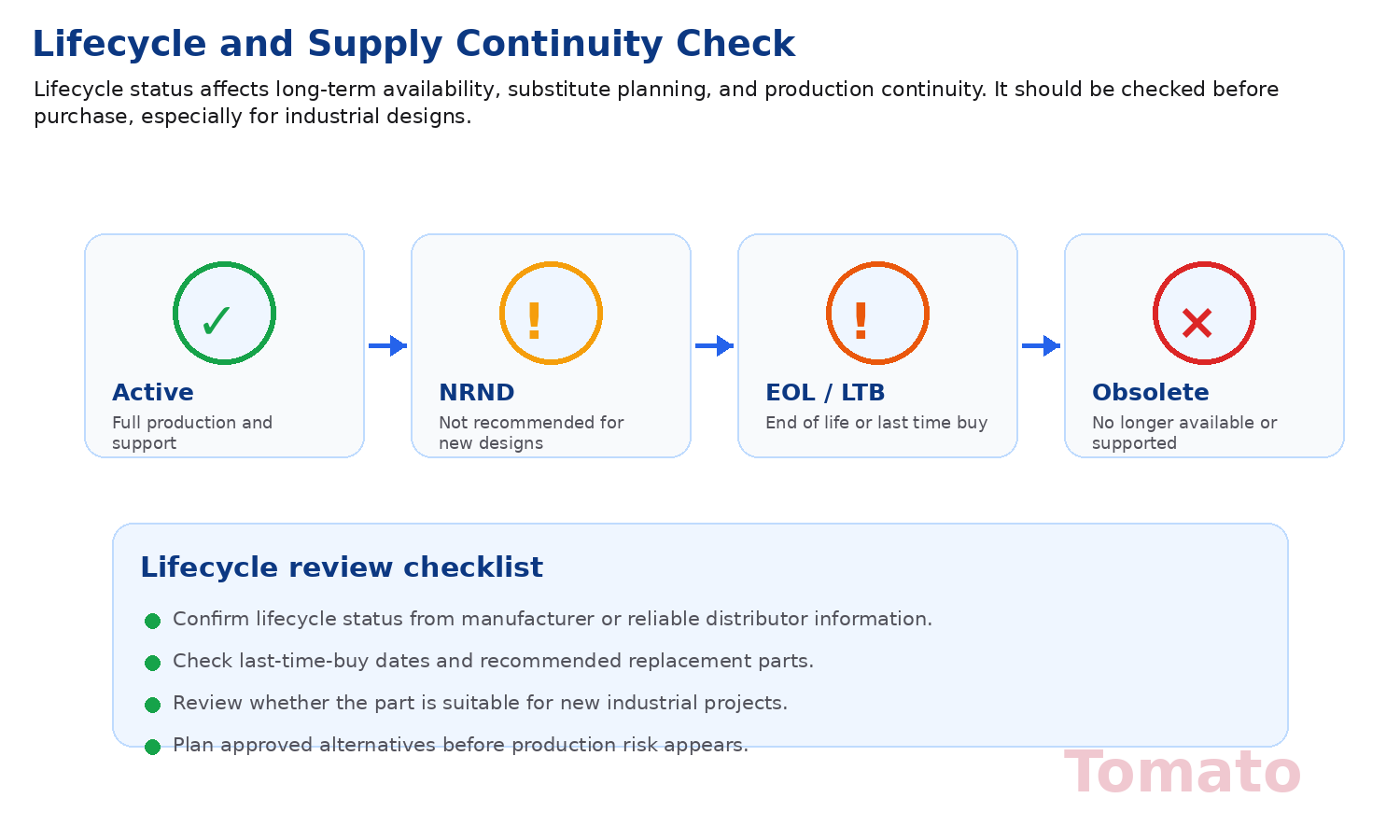
If the part has lifecycle risk, the sourcing team should discuss whether to buy enough stock, qualify an alternative, or redesign around a more stable component before production is affected.
5. How to Reduce Wrong-Part and Supply Risk
Wrong-part risk is usually reduced when buyers and engineers confirm the same information from multiple angles. A good review compares part number, package suffix, datasheet revision, authorized information, supplier quotation, stock label, and actual application requirement.
For higher-value or production-critical components, teams should also confirm whether samples, test reports, photos, date codes, lot information, or quality documents are needed before bulk purchase.
When a substitute is being considered, the review should be even stricter. The replacement should be checked for fit, form, function, electrical margin, lifecycle stability, qualification effort, and supplier reliability before it is approved for production.
6. Practical Pre-Purchase Checklist
Before buying electronic components, review the following checklist:
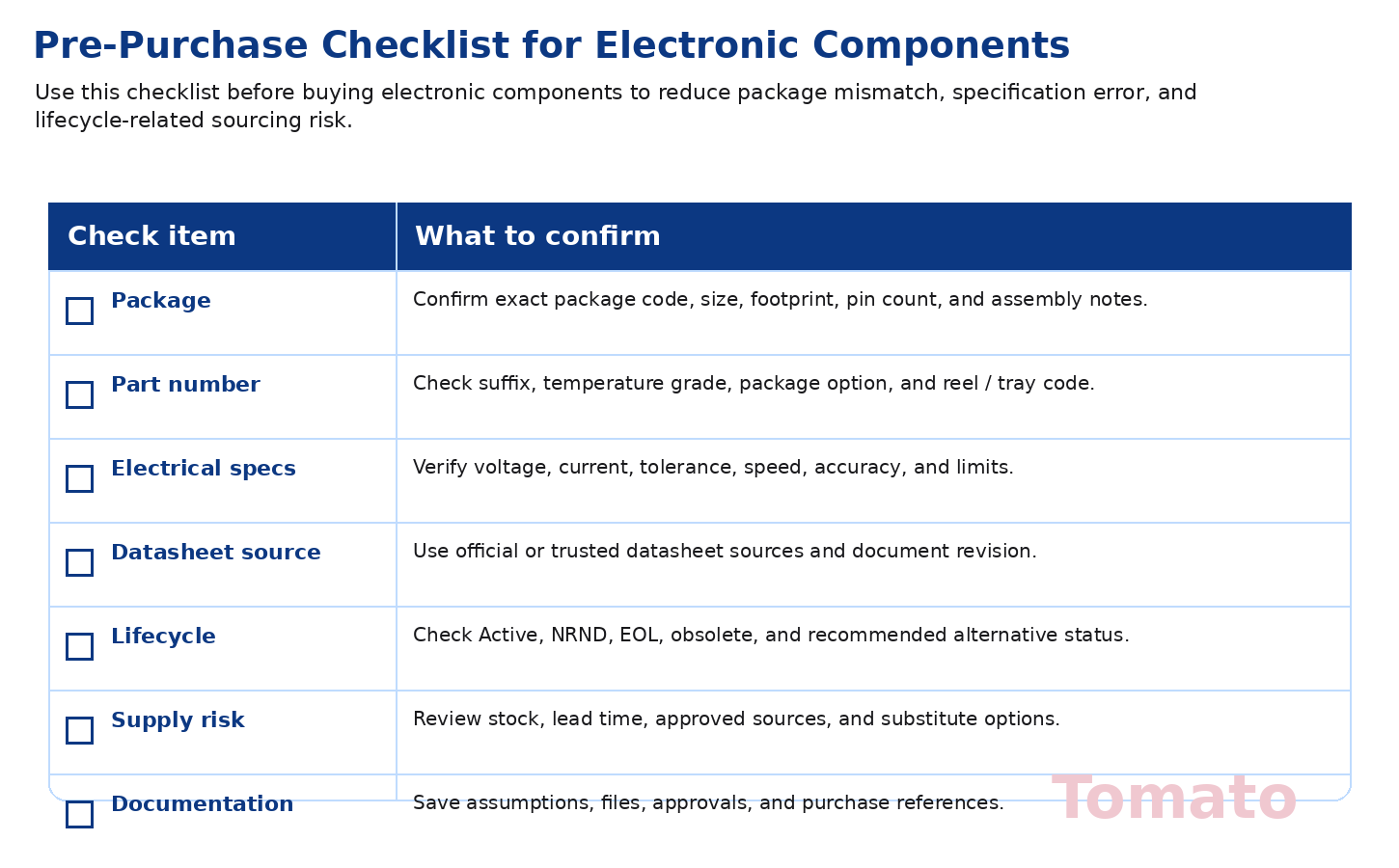
- Confirm the full manufacturer part number and suffix.
- Check exact package code, size, footprint, and pin count.
- Verify key electrical specifications against the application requirement.
- Review temperature grade, reliability grade, and compliance requirements.
- Check lifecycle status, replacement options, and long-term supply risk.
- Confirm supplier source, stock quantity, packing format, and lead time.
- Document datasheet revision, assumptions, and approval records before purchase.
7. Conclusion
Confirming package, specifications, and lifecycle before buying electronic components is a simple but important step in reducing sourcing mistakes and production risk. The right part should not only match the part number, but also fit the PCB, meet the real operating requirement, and support the project's long-term supply needs.
A careful pre-purchase review can help avoid wrong-package orders, specification mismatch, qualification delays, and unexpected lifecycle problems. If you are reviewing electronic component sourcing options, visit the TomatoElec homepage or contact us through the contact page.