
Available 24/7 at
0755-82798135

TI Hot Swap and Power Protection Devices for Data Center Applications
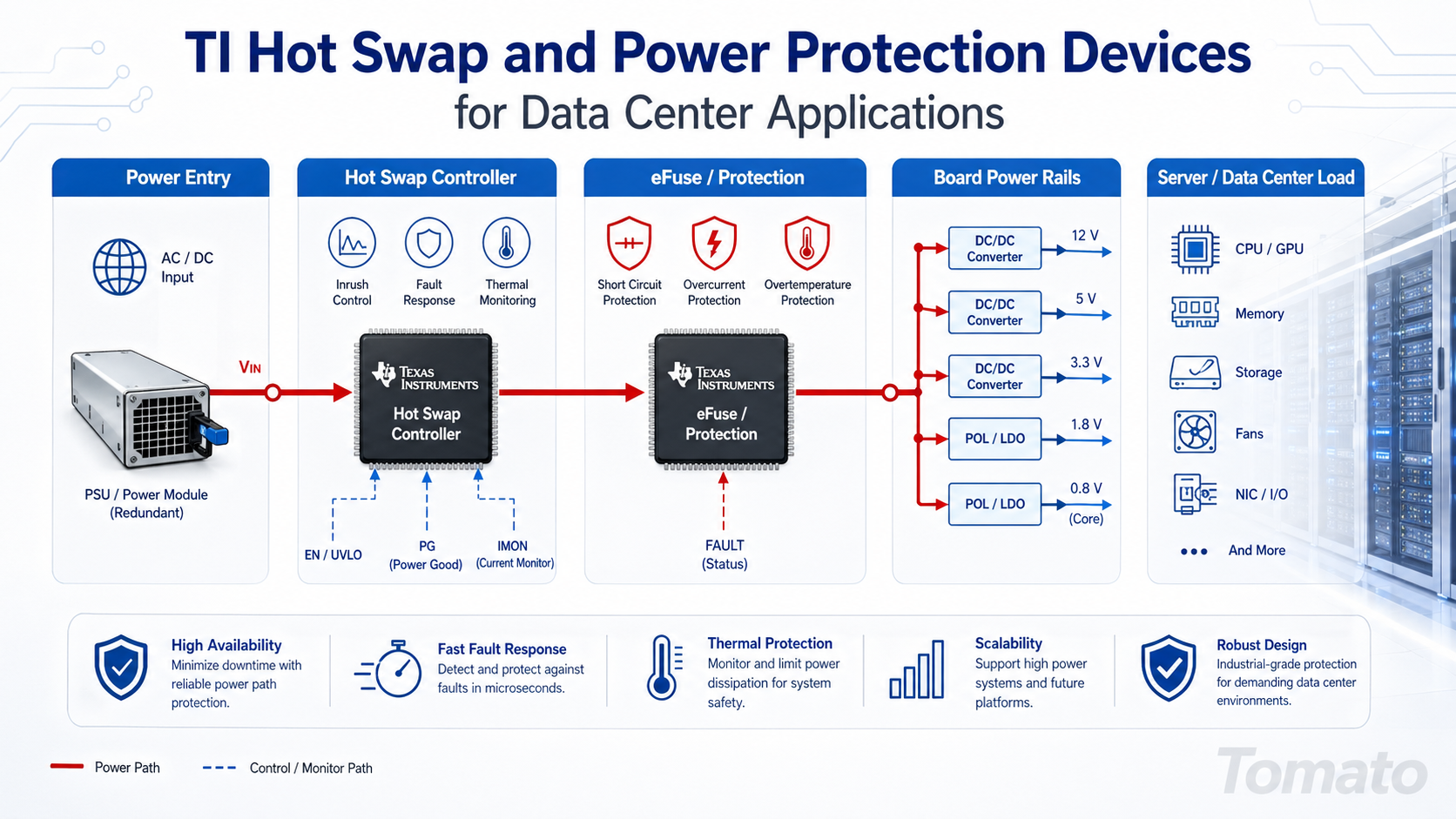
Modern data centers require highly reliable power architectures to support servers, storage platforms, networking equipment, and AI computing hardware. In these systems, hot swap and power protection devices are important because they help manage power entry safely, limit inrush current, isolate faults, and reduce the risk of damage to critical boards and subsystems.
Texas Instruments offers a wide range of hot swap and protection-related solutions that are relevant to server and data center power design. These devices can help improve uptime, system safety, and serviceability, especially in environments where boards may be inserted, removed, or exposed to demanding electrical conditions. To explore more electronic components and sourcing support, visit TomatoElec.
Why Hot Swap and Power Protection Matter in Data Centers
Data center systems often operate with high current loads, multiple voltage rails, and strict reliability requirements. During startup, board insertion, load transients, or fault events, uncontrolled power behavior can lead to voltage drops, excessive current, thermal stress, or damage to expensive components. That is why hot swap and protection devices are widely used in server and rack-level power designs.
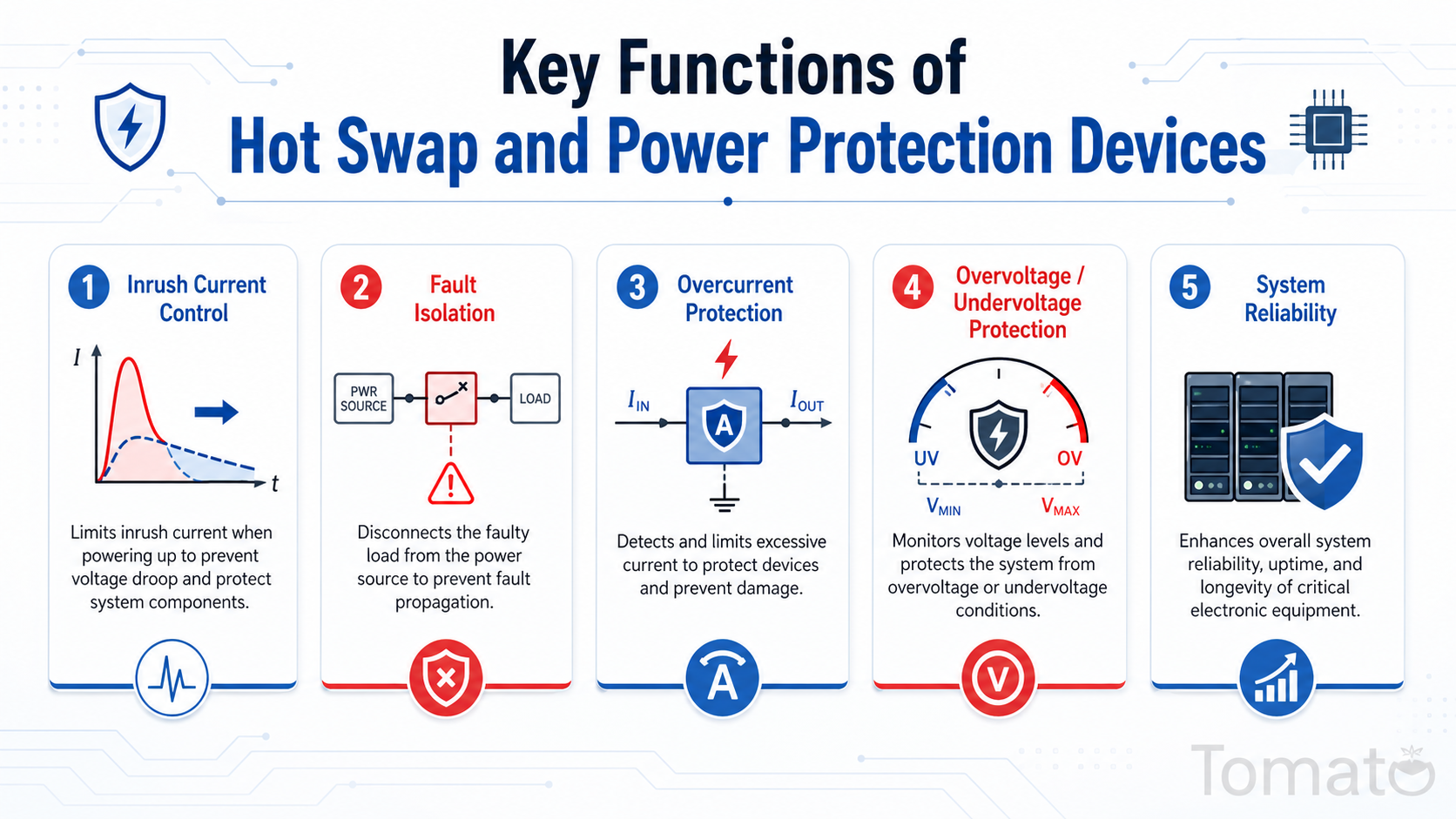
Hot swap devices help control inrush current when power is applied to a board or subsystem. Protection devices can detect overcurrent, overvoltage, undervoltage, and fault conditions, then respond quickly to prevent wider system damage. In practical terms, these functions help improve availability, simplify maintenance, and support safer operation in high-value infrastructure.
Key TI Device Categories
1. Hot Swap Controllers
Hot swap controllers are designed to manage the safe connection of boards and modules into powered systems. They typically control inrush current, protect against short circuits, and help avoid damage during insertion or startup. In data centers, these functions are especially useful for server blades, storage modules, and other serviceable hardware.
2. eFuse and Electronic Protection Devices
eFuse devices provide integrated electronic protection functions such as overcurrent protection, short-circuit response, and fault management. They can offer compact and fast-reacting protection for sensitive loads, making them useful in modern server and power distribution designs.
3. Inrush Current and Power Path Management
Inrush current control is essential where large input capacitors or sensitive downstream rails are present. Proper power path management helps maintain system stability during startup and prevents unnecessary stress on connectors, boards, and upstream supplies.
4. Overvoltage and Undervoltage Protection
Voltage abnormalities can lead to instability or device damage. Protection solutions that monitor voltage thresholds and react to abnormal conditions are important in data center hardware, where system continuity and hardware safety are both high priorities.
5. Fault Reporting and System Monitoring Support
Many protection devices also support fault reporting or system monitoring features. These functions help engineers improve visibility into system behavior, making it easier to identify failures, respond quickly, and maintain overall reliability.
Typical Data Center Applications
Server Boards and Compute Modules
Server motherboards, accelerator cards, and compute modules often require controlled startup and reliable protection. Hot swap and protection devices help reduce risk during insertion, servicing, or abnormal operating events.
Storage and Networking Equipment
Storage arrays and networking systems also depend on stable power delivery. Protection devices can help isolate faults and prevent one failing module from affecting other parts of the system.
Rack-Level Power Distribution
At the rack level, protection and controlled power delivery are important for maintaining safe and scalable infrastructure. As power density increases, system designers need stronger control over fault response and power path behavior.
Key Selection Factors
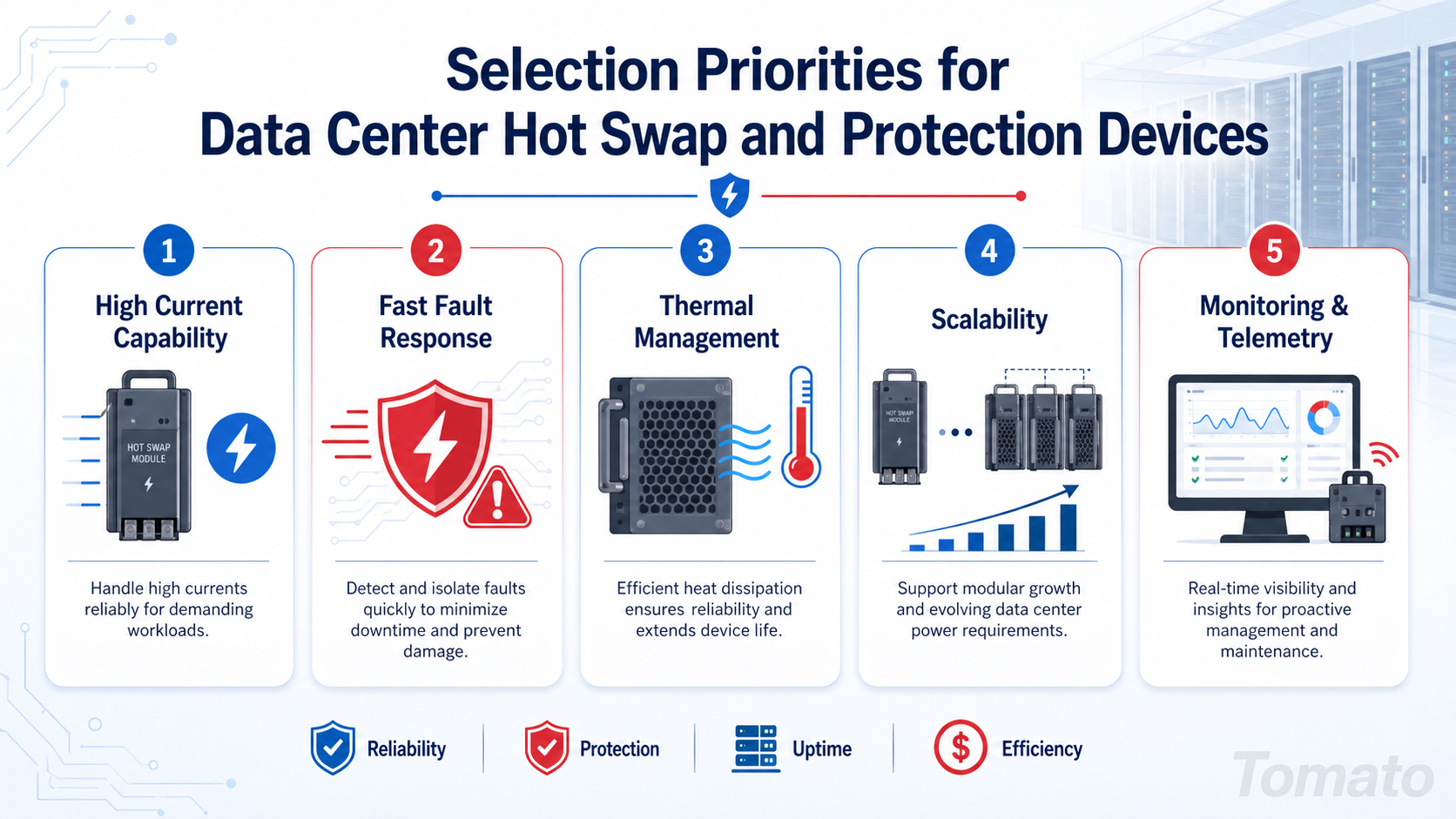
Input Voltage Range
Make sure the device matches the actual system voltage and expected operating conditions.
Current Capability
The selected solution should support both normal load current and transient requirements with sufficient design margin.
Fault Response and Protection Features
Review whether the device supports the required protection functions, such as overcurrent, short-circuit, undervoltage, or overvoltage response.
Thermal Performance
Thermal behavior is important in dense server systems. Devices should be chosen with realistic thermal conditions and board layout considerations in mind.
System Integration and Monitoring
It is also useful to consider how easily the device fits into the broader system architecture, including monitoring, fault reporting, and maintenance strategy.
Common Design Mistakes to Avoid
Ignoring Inrush Current
Underestimating startup current can lead to unstable behavior, connector stress, or protection misoperation.
Choosing Devices Without Enough Margin
In data center systems, transient conditions can be demanding. Selecting devices too close to the normal operating limit can reduce reliability.
Overlooking Thermal Conditions
Even good protection choices can perform poorly if thermal design is ignored.
Focusing Only on Basic Protection
Modern designs often benefit from devices that support fault reporting, monitoring, and easier system-level management, not just simple cutoff protection.
Conclusion
TI hot swap and power protection devices are highly relevant in modern data center applications. They help control inrush current, protect valuable hardware, isolate faults, and support more reliable server and rack power architectures. For engineers and sourcing teams, choosing the right protection solution can improve both electrical safety and long-term system stability.
If you are looking for TI-related components and sourcing support for server and data center projects, you can explore more products at Power Management (PMIC), visit the TomatoElec homepage, or contact us through the contact page.