
Available 24/7 at
0755-82798135

Key TI Power Management Components Used in Server and Data Center Designs
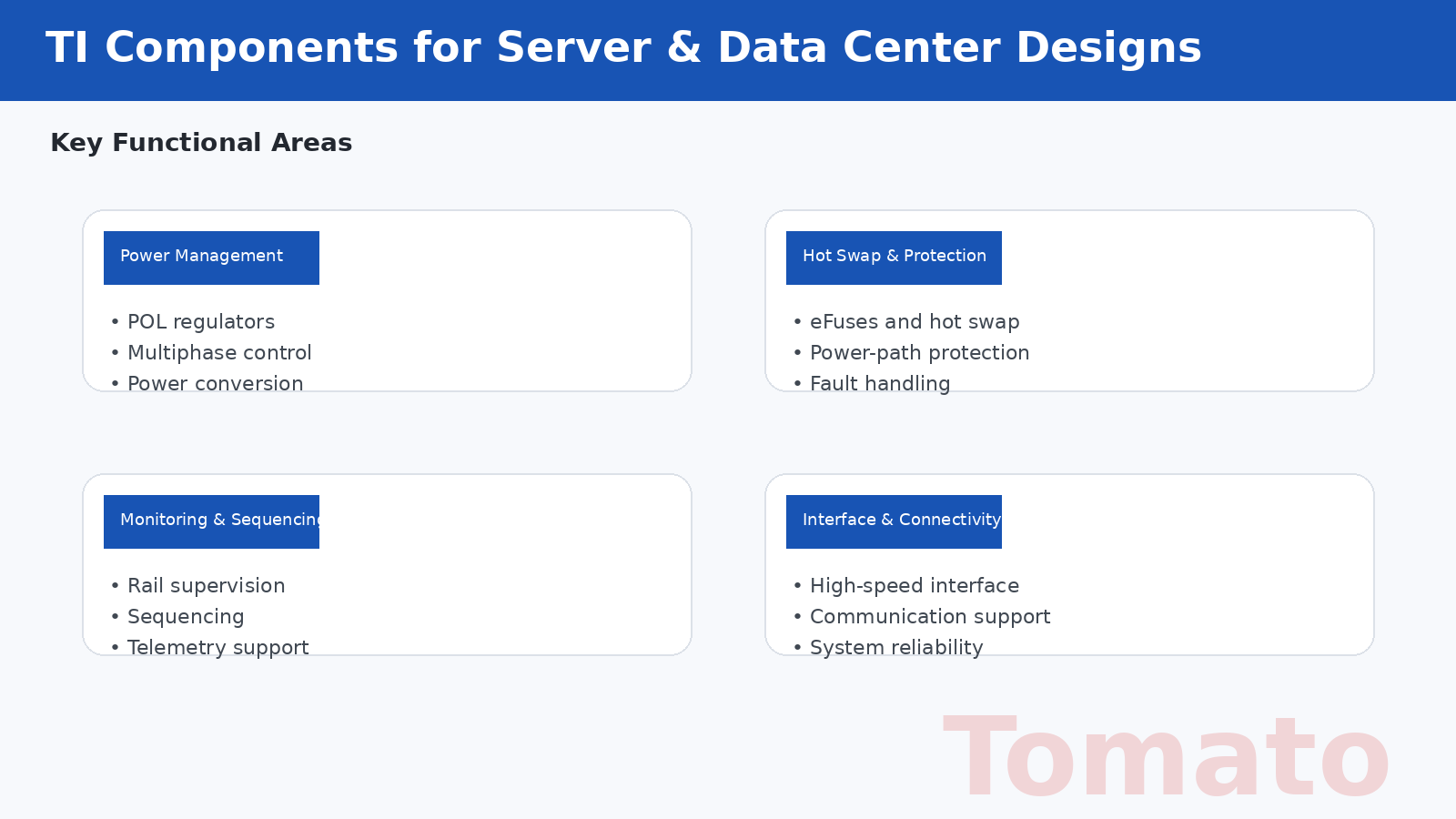
TI positions data center compute as a power-intensive design area and highlights solutions such as multiphase controllers, power stages, point-of-load regulators and converters, hot-swap controllers, plus interface and connectivity devices for server and rack designs.
As server platforms and AI-oriented data center hardware continue to increase in power demand, designers need more than basic power conversion. They need coordinated solutions for power entry, board-level conversion, rail sequencing, monitoring, fault protection and thermal management.
In this guide, we look at the main categories of TI power management components commonly associated with server and data center designs, and explain why these categories matter when building efficient, scalable and reliable electronic systems. To explore more electronic components and sourcing solutions, visit TomatoElec.
Why Power Management Matters in Server and Data Center Designs
Server and data center platforms operate under demanding electrical conditions. They often include multiple power rails, high-current processors, memory subsystems, accelerators, networking devices and interface modules. As compute density rises, designers must improve efficiency while controlling heat, ensuring stability and protecting hardware from fault conditions.
In practice, this means power design is no longer just about converting voltage. It also includes power-path protection, hot-swap support, rail monitoring, sequencing, telemetry, and system supervision. These supporting functions are essential parts of a complete power approach.
Key TI Power Management Component Categories
1. Point-of-Load Regulators and DC/DC Converters
Point-of-load regulators and DC/DC converters are central to modern server boards. They help derive tightly controlled voltages close to processors, FPGAs, memory and other high-performance devices.
2. Multiphase Controllers and Power Stages
For high-current processor rails and high-density computing platforms, multiphase solutions are especially important. They support efficient current delivery, scalability and tighter board-level power design in server environments.
3. Hot-Swap and eFuse Protection Devices
Power entry protection is critical in server and rack systems. Hot-swap controllers and integrated protection solutions are particularly relevant for live insertion, fault isolation and power-path protection.
4. Power Monitoring, Supervisors and Sequencers
Server boards often require coordinated rail startup and continuous monitoring. Supply rail and processor rail monitoring, sequencing and supervision are important functions for reliability and fault management in enterprise and compute applications.
5. Interface and Connectivity Support Around the Power Path
Although this article focuses on power management, interface and connectivity solutions also matter in broader server platform design. In real systems, power and interface reliability often overlap, especially in control, monitoring and telemetry paths.
Typical Use Cases in Server and Data Center Systems
CPU, GPU and Accelerator Power Rails
High-performance compute sections require tight voltage regulation, strong transient response and efficient current delivery. This is one reason multiphase control, point-of-load regulation and high-density power conversion matter so much in server and AI-related designs.
Board-Level Protection at Power Entry
Hot-swap and eFuse-style protection devices are relevant where boards, cards or subsystems need controlled inrush behavior and fault isolation.
Rail Monitoring and Sequencing in Complex Platforms
Large server boards and data center subsystems often have multiple dependent rails that must start up in the correct order and remain within operating limits.
Rack and System-Level Power Evolution
As AI workloads drive higher energy demands, power density, conversion efficiency and scalable architecture become increasingly important design and sourcing considerations.
What Engineers and Buyers Should Look For
Power Density and Efficiency
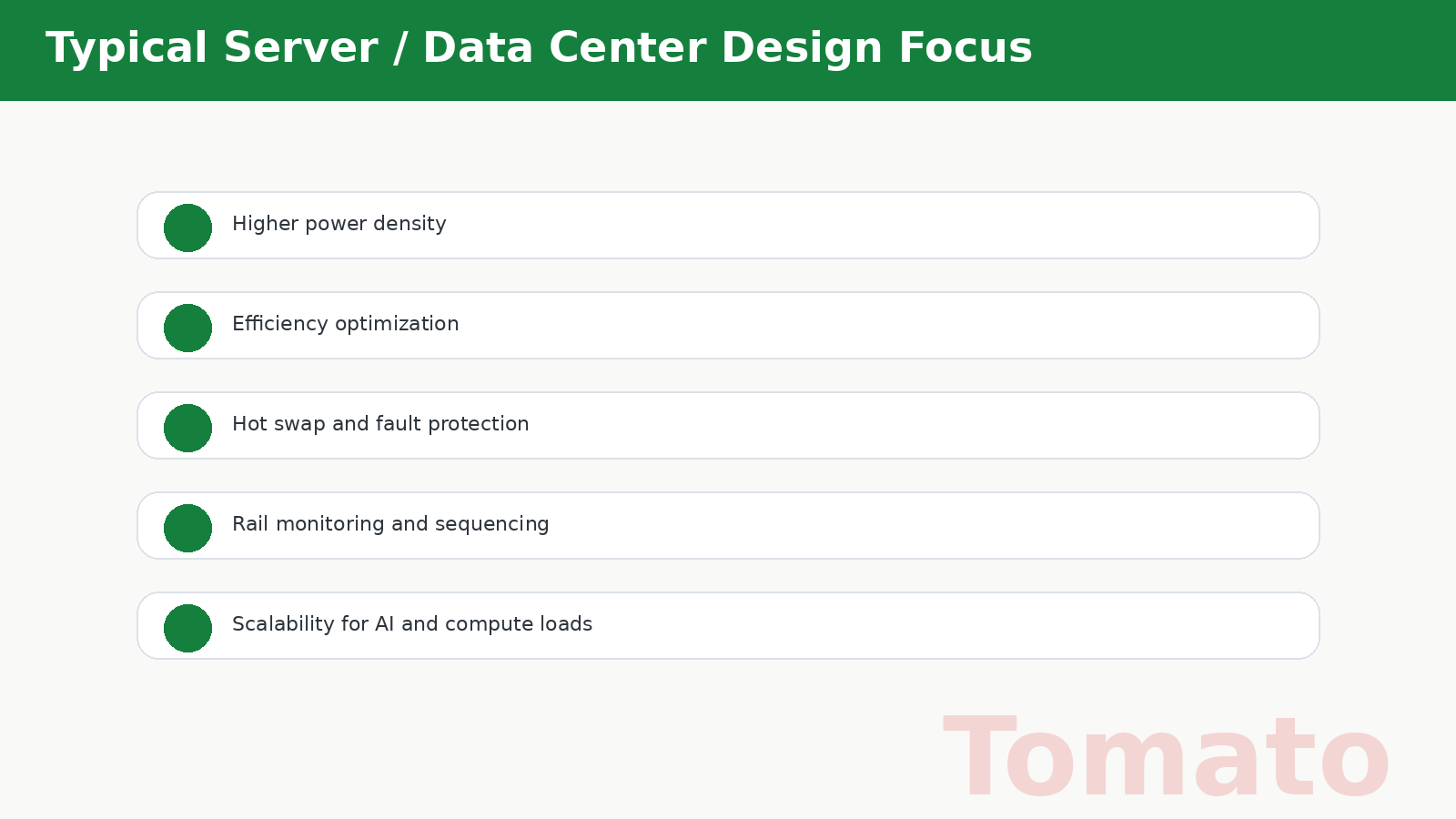
Modern server and data center systems need efficient conversion in limited space. Higher power density and reduced losses are central requirements in demanding applications.
Protection and Fault Handling
Protection at the board and subsystem level is essential in many data center designs. Hot-swap capability, power-path protection and fault isolation all matter in high-value server hardware.
Scalability
As compute loads increase, designers need solutions that can support evolving architectures without sacrificing efficiency or reliability.
Monitoring and System Visibility
Reliable server platforms need more than conversion and protection. They also need monitoring, telemetry and rail-level visibility.
Common Design Priorities
Higher Density Without Losing Control
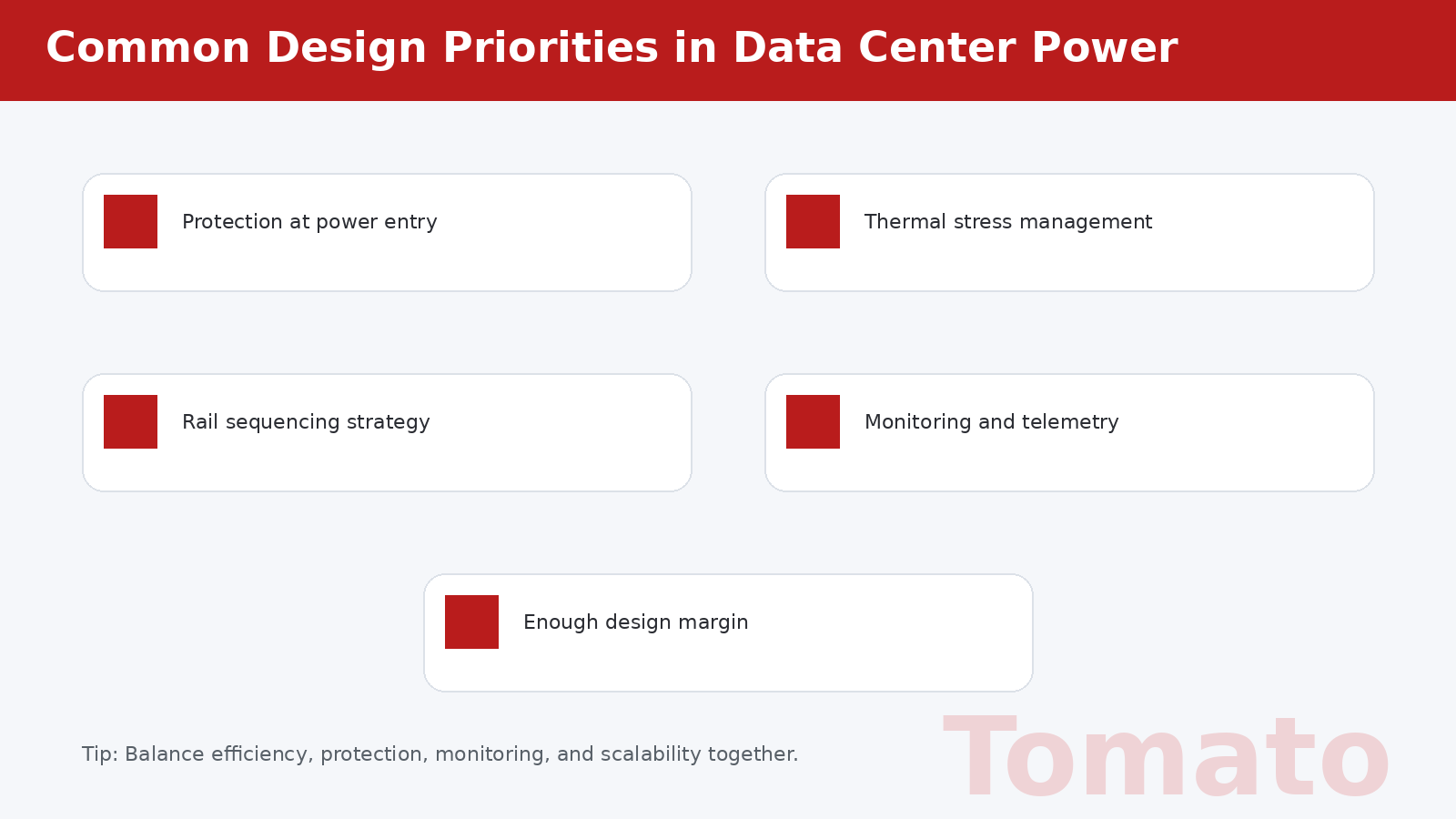
As boards become denser, designers need integrated and efficient power solutions that still support monitoring, protection and stability.
Thermal Management
Even efficient designs must deal with concentrated thermal stress in compute and server environments.
Protection at the Right Locations
Power entry, intermediate buses and local rails all require appropriate protection strategies, depending on architecture and fault risk.
Enough Margin for Real Workloads
Server and AI workloads can create demanding dynamic conditions, so practical design margin remains important.
Conclusion
TI-oriented server and data center designs place a clear emphasis on power management, including point-of-load regulation, multiphase control, power stages, hot-swap protection, monitoring and sequencing. These categories are highly relevant in modern server and data center designs where efficiency, density, protection and scalability all matter.
For engineers and sourcing teams, the practical value is not just in choosing a brand, but in matching the right functional categories to the actual system architecture. If you are looking for TI-related electronic components and broader sourcing support for server and data center projects, visit TomatoElec or get in touch through the contact page.