
Available 24/7 at
0755-82798135

How to Choose the Right TVS Diode for Circuit Protection
TVS diodes, or transient voltage suppressor diodes, are widely used in electronic circuits to protect sensitive components from voltage spikes, surge events, and electrostatic discharge. In modern electronic products, protection design is just as important as functional design, especially in industrial systems, automotive electronics, communication equipment, consumer devices, and power interfaces.
Without proper transient protection, sudden voltage surges can damage ICs, shorten product lifespan, or cause unstable system behavior. A correctly selected TVS diode helps clamp excess voltage quickly and improves overall circuit reliability.
In this guide, we explain how to choose the right TVS diode for circuit protection, what parameters matter most, and how to match the right protection device to your real application. To explore more electronic components and sourcing solutions, visit TomatoElec.
What Is a TVS Diode?
A TVS diode is a protection device designed to respond rapidly to transient overvoltage events. When a voltage spike exceeds its protection threshold, the TVS diode clamps the voltage and diverts excess current away from sensitive circuit components.
TVS diodes are commonly used for:
- ESD protection
- Surge suppression
- Power line protection
- Signal line protection
- Automotive transient protection
Because TVS diodes react very quickly, they are often used as a frontline protection component in circuits that must survive electrical stress.
Why TVS Diodes Matter in Circuit Protection
Electronic systems are often exposed to unwanted transient events caused by switching, inductive loads, hot plugging, automotive load dump, cable discharge, or external surge sources. Even a short overvoltage event can damage processors, communication interfaces, sensors, power inputs, or memory devices.
A properly chosen TVS diode can help limit voltage to a safer level and reduce the risk of permanent component failure. This is especially important in products with exposed interfaces, external cables, industrial environments, or automotive applications.
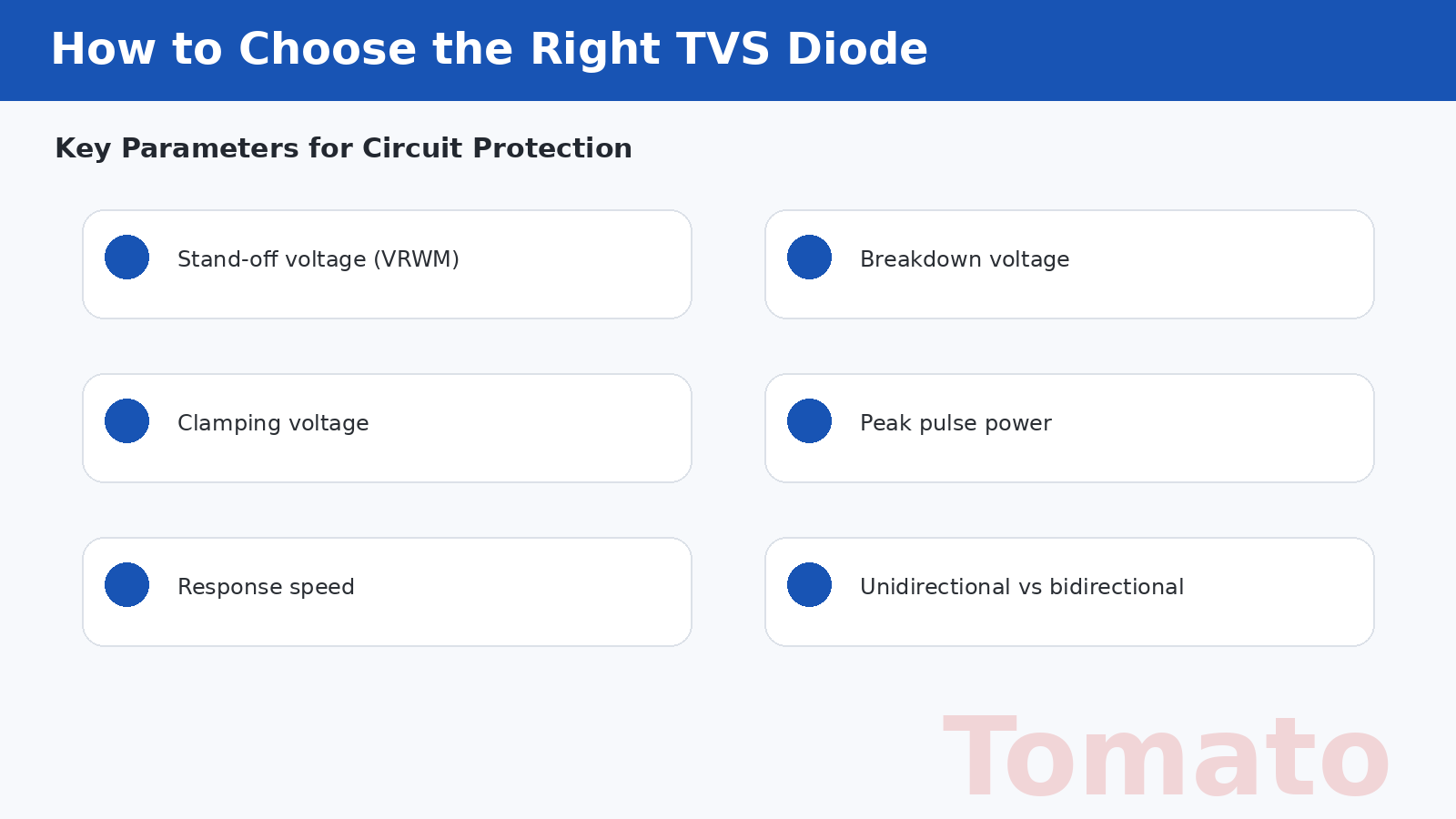
Key Parameters to Check
1. Stand-Off Voltage (VRWM)
Stand-off voltage is the maximum continuous operating voltage that the TVS diode can tolerate without entering breakdown. This value should be selected above the normal working voltage of the protected circuit.
2. Breakdown Voltage
Breakdown voltage is the point at which the TVS diode begins to conduct significantly in response to an overvoltage event. It should match the protection target of the circuit.
3. Clamping Voltage
Clamping voltage is one of the most important parameters. It indicates the maximum voltage the TVS diode will allow during a transient event. This value must remain below the maximum safe limit of the protected components.
4. Peak Pulse Power
Peak pulse power shows how much transient energy the TVS diode can absorb under a specified waveform condition. If the surge energy in the real application is high, this parameter becomes critical.
5. Response Speed
TVS diodes are designed for fast response, but selection should still consider the speed and type of transient event involved, especially for ESD and data line protection.
6. Unidirectional vs Bidirectional
Unidirectional TVS diodes are often used for DC lines, while bidirectional types are common in AC lines or signal lines that swing in both directions. Choosing the wrong type may reduce protection effectiveness.
7. Package and Layout Considerations
Package style, PCB placement, and trace routing also affect protection performance. A well-selected TVS diode should also fit the layout and the expected thermal and mechanical conditions.
Typical TVS Diode Applications
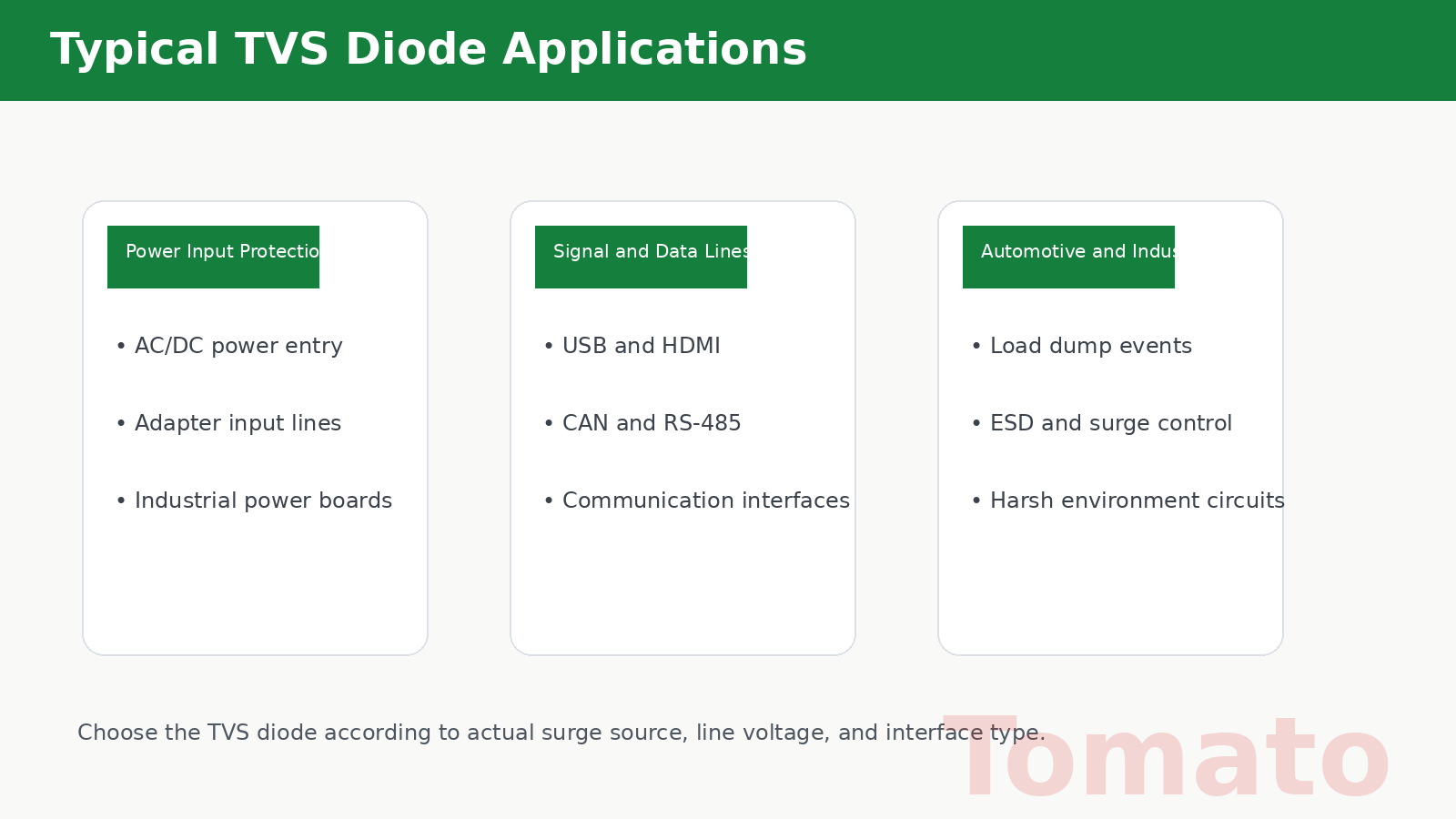
Power Input Protection
TVS diodes are often used at power entry points to protect circuits from surge events, adapter plugging, and external power disturbances.
Signal and Data Line Protection
Interfaces such as USB, HDMI, RS-485, CAN, and communication ports may require TVS protection against ESD and fast transient events.
Automotive Electronics
Automotive systems often face load dump, inductive switching, and harsh electrical environments. TVS diodes are commonly used to protect power and signal lines.
Industrial Equipment
Industrial boards and control systems are often exposed to surge sources, relay switching, and external noise, making TVS protection an important part of robust design.
How to Choose the Right TVS Diode
Match the Operating Voltage
Select a stand-off voltage that is safely above the normal circuit voltage but not unnecessarily high.
Check the Protected IC Limits
Make sure the clamping voltage stays below the maximum voltage that the protected IC or interface can tolerate.
Understand the Surge Source
Different applications involve different surge conditions. ESD protection for a signal line is not the same as load dump protection in automotive power input.
Choose the Correct Direction Type
Use unidirectional or bidirectional TVS diodes according to the line type and signal behavior.
Review Power and Package Requirements
If the surge level is large, the diode must provide enough peak pulse power and use a package suitable for the required protection level.
Common Selection Mistakes
Choosing the Wrong Stand-Off Voltage
If the stand-off voltage is too low, the TVS diode may interfere with normal operation. If it is too high, protection may be ineffective.
Ignoring Clamping Voltage Limits
A TVS diode may survive the surge, but if its clamping voltage is still too high for the protected IC, the circuit can still fail.
Undersizing Peak Pulse Power
If the selected TVS diode cannot absorb the real surge energy, it may fail during actual field conditions.
Using the Wrong Direction Type
Using a unidirectional TVS diode where a bidirectional type is needed may lead to incomplete or incorrect protection.
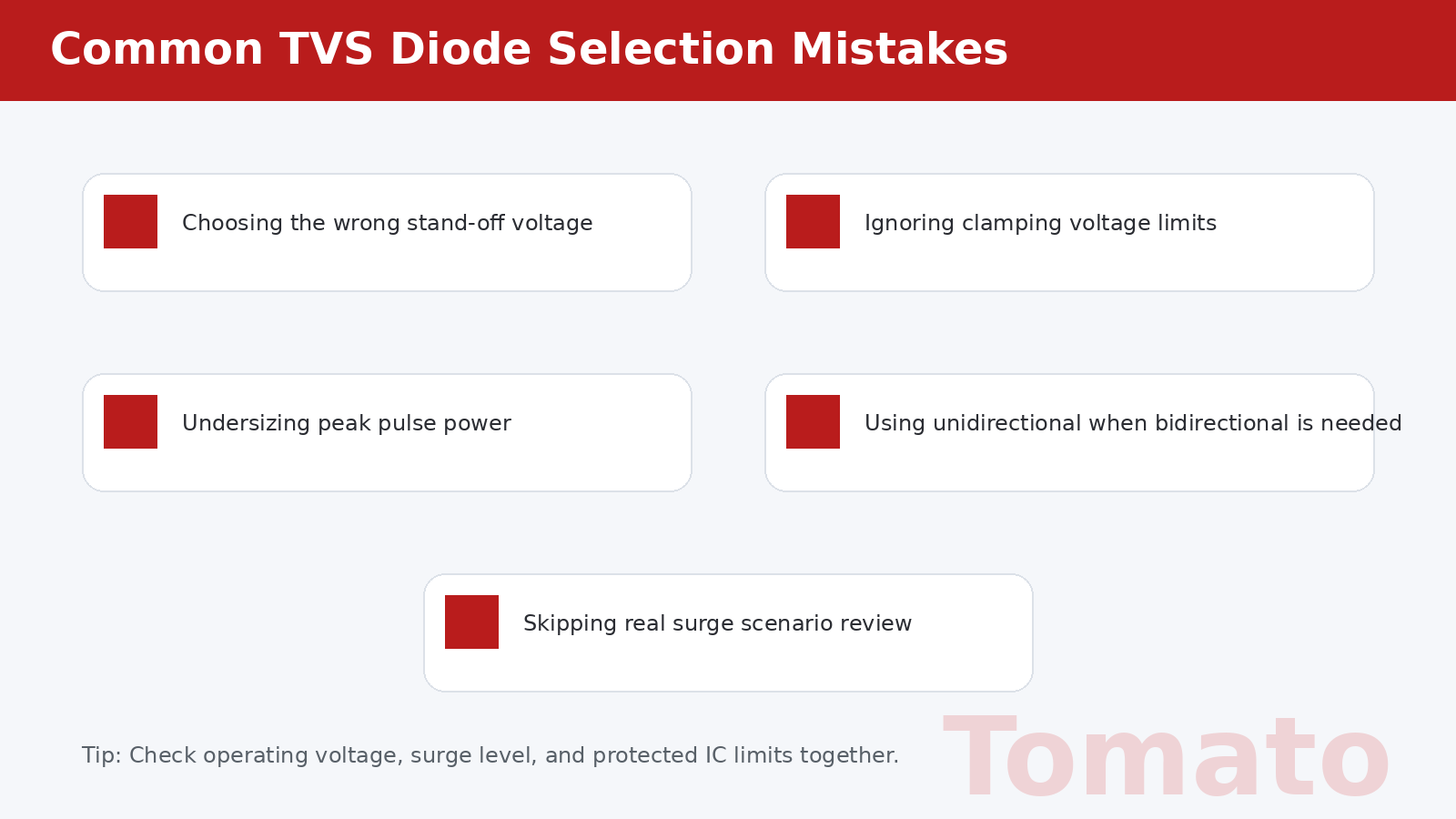
Skipping Real Application Review
Selection should always be based on actual surge conditions, line voltage, protected IC limits, and interface behavior.
Conclusion
Choosing the right TVS diode is an important part of circuit protection design. Stand-off voltage, clamping voltage, peak pulse power, direction type, and real surge conditions all matter. A suitable TVS diode can improve reliability, reduce field failures, and help protect valuable electronic systems from transient damage.
By understanding the key selection factors and matching the device to the actual application, engineers and buyers can make more effective protection decisions. If you are looking for TVS diodes and other electronic components for your next project, visit TomatoElec to explore more diode products or reach out through the contact page.